Split Decisions

Rose spit into the dirt, disgusted with herself, so mad she could barely see straight.

What jerks. She hadn’t been doing anything. Why did they hate her so?

She picked herself up off the lawn, peeling away the blades of grass that were stuck to her knees one by one, fingering the long dent-canals they left behind on her skin.

The kids had already moved on down the block, their laughter taunting her as they looked back, turning the corner.

She felt the hot flush of shame rush down the back of her neck and through her body, her fingers tingling, tears flooding her eyes.

She choked it all down and thought about what she could do. There was no where to go. No one to tell.

“This is just temporary, honey. You’ll see. In time, they’ll get to know you, you’ll find friends.” Her Mom tried, but she had no idea of the way things really were.

She folded her pain and confusion back into the loneliness that she carried with her always, and with lips pressed together with determination, she walked back home to the numbing relief and friendship to be found in oreos and chips. 

At least she had that.

#bullying #therootoftheproblem #foodisnotlove

Inspired by The Daily Post word prompt: temporary

A Skin Horse Awakening

I come from a long line of control freaks.

Which is to say, my people, like many, are highly motivated by fear. Highly.

Particularly my father. I will never know why or how he developed into such a fierce perfectionist. I only know that it is a trait that definitely carried over into my own makeup, much to my chagrin.

I am a recovering perfectionist. But a perfectionist nonetheless.

It’s an exhausting way to live. And exacting.

My father was incredibly hard on himself and set extremely high standards of behavior for himself, and for others.

This led to a family dynamic that was often painful, confusing, sometimes dangerous, often maddening, and, ultimately, costly. Costly, because it affected the quality of relationship between us all.

At least that’s been my experience and belief. I am sure everyone in my family could offer their own. But this is mine.

Without wanting to sound like someone justifying an abuser’s bad behavior, I do believe, truly, today, that he was coming from a well-meaning intention. He genuinely loved us as best he knew love to be, and he wanted us to succeed at life.

I can say that today. But if you also grew up with a controlling, perfectionistic parent living from unconscious fear, you know that there are many other feelings that have preceded this place of understanding, this perspective of compassion.

I felt so controlled in my childhood. There are moments still when I can feel the ghosting sensation of a yoke on my neck and shoulders. No, I was not made to wear a literal yoke. But I felt so managed, so handled, that there is a tension, a ‘cautiousness’ in my body that literally feels like an actual yoke.

Granted, I was the youngest child. I think most youngest children feel to some degree that they were expected to just go where they were told to by the others.

But in our family, for me, this went much deeper.

There was an unspoken agreement that everything in our household revolved around my father’s needs and wants.

He had a way he wanted things to be done. A way he wanted our family to be seen by others. He had an idea in his mind of a Rockwell-painting family.

And we fell short. Way short. And I think, on some level, he must have felt tesponsible for our “failure.” Or carried a deep-seated fear that other people would see him as being responsible for his failure.

I am not exaggerating by saying that he was controlling. He once demanded that my brother chew his food a certain number of times, feeling that this would solve his weight gain following an injury sustained during football training.

I saw him become enraged at our dog because she would not “behave.” I feared for her life on more that one occasion, and my own as well.

These were tangible expressions of his attempts at control. But much more affecting in my opinion were the much more subtle ways. With his tone, with his body language, he could command our collective sense of well-being. Depending on the kind of parents you grew up with, you may not quite grasp how this could be so destructive.

He was a big and tall man. Rage in him was quite powerful. Though he never lifted a finger to me (I was spared, I think, being female,) his energy was quite a weapon deftly wielded.

In order to please, I learned to exist, even to breathe, very carefully. I practiced sitting, walking and expressing myself so as to be what I thought would be most well-received. I watched myself, learning to be incredibly self-conscious so that I could, to the best of my ability, create behavior that would be acceptable and not create any negative response from my father. I learned to present a version of myself to my family and to others, to project and maintain an “image,” to try to “control” what I thought (hoped or feared) you thought of me. This, I have learned since, was a way of living I developed in order to feel safe.

Safe. That is a concept I am still unravelling. It was not a word that was on my radar until quite recently. I did not consciously realize that I lived in body that felt unsafe 100% of the time until several years ago. The constant state of “shell shock” felt normal to me. With help, I learned that I had a right as a person to feel this state of being, this “safe.”

I work with my body on that. Catch myself holding my breath and body steeled against attack as I go about mundane tasks wherein there is no perceived threat. But my body doesn’t seem to operate from that knowing there is no threat as its usual state of being. Instead, it is on high super alert 24/7. As I said, exhausting. But this behavior, this conditioning, having been learned (it is not what my body came into this world doing…my true essential nature is not fearful) means that I can learn other behavior and condition myself towards it.

As with all personality traits, there were positive benefits from his exacting and controlling ways. They served him well in his profession. He was, in his career, incredibly respected and successful as a result of his dedication and sheer will.

He built an empire from poverty. Amazing, really.

But the price he paid for it was not worth it in the end, I feel confident saying that. He and I found our way to a relationship at the end of his life. For that I am forever grateful. But as a result of many things, his controlling behavior being key, we lost out on having any real father-daughter relationship early on. A deep loss for each of us, I know.

I am in the midst of doing a deep, deep clearing of all of my belongings. I just found and read a letter he wrote to me when I was in my 20’s. We’d been years into a very volatile relationship. Once I was no longer under his roof and had independence, I began to fight back in passive aggressive ways, using my own finely honed talent for control to withhold and manipulate his attempts to connect.

I don’t recall reading it then. I am sure I was too filled with hurt and rage then to even “see” him in its words.

I do remember my mother telling me at the time it was a huge deal that he’d written it, but at the time, I couldn’t comprehend or appreciate that. He was maybe 10 years older then than I am now. He was looking back at his life and seeing things from wiser eyes. He was aware that his time left to resolve our issues was limited. He was trying to break out of his own exquisitely built shell, perhaps.

Today, I can feel the real man/the bewildered boy he was in those sentences, in the words he carefully chose. It’s funny, he uses the word “ghost” to describe how it feels for him to try to keep trying to get close to me. That it is as if there is some ghost there that he can never meet or see in order to face the problem.

He was so right, though I could not deal with it then. There were several ghosts there, ghosts that I am still living with today.

But I have been befriending mine. Compassion is key. The last thing my internalized father-bully needs is to be bullied. I have awareness, and I have choice. I do not have to live out of control and perfectionism in order to feel OK in the world. I give myself the fathering my father must never have had himself. And I work hard at my relationships with others so that I do not make them feel the way I felt growing up.

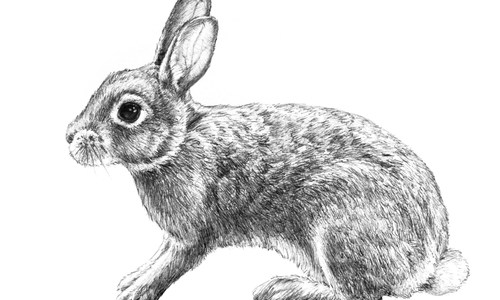
It takes work, but like the Velveteen Rabbit, today I am alive and Real and I have real, loving, healthy relationships with other people.

Inspired by The Daily Post word prompt: control

Unnecessary Loss

Where oh where did you go

Oh Blankie of mine?

Who would I be now

if it’d been up to me to let you go?

They just saw tatters of a well-worn blanket

An outgrown toy, a nuisance, embarrassing proof of their failed parental skills

You were the key to my security on this spinning planet

My anchor, my buddy

Maybe it would have made all the difference

I wouldn’t still carry this feeling that there’s no thing and no one on this earth to truly rest my heart on

This ever-constant ache for more of something I can never put my finger on yet can never have enough of

One day you were just gone

No one would tell me where you’d gone to

Which was worse — thinking you’d abandoned me

Or that they’d betrayed me?

What book suggested that solution

Was it you, Dr. Spock?

I know, I know

“I am my own Blankie now”

Fuck that.


#blanket #childrearing #loss #betrayal

Daily Prompt: Blanket

On Being “Childless”

via Daily Prompt: Ruminate

There are things that I ruminate on, like the way my tongue cannot keep itself off of the sharp, spiky tip of my left incisor.

One of those things that I touch on again and again despite its spiky sharpness is the subject of being childless. It is uncomfortable terrain, but I go there again and again anyway.

I hate that term, “childless.” As if by not having a child, you are less somehow, than those who have had them.

Some people prefer “childfree.” That doesn’t quite feel right to me, as if children are something that I wanted to avoid for health reasons, like gluten, or sugar.

I love children. I think they are the greatest people on the planet. I have many children in my life.

But no, I am not a mother.

And boy, is that complicated. For me, and for most people in the world, it seems. So I must, in sensitivity to other people who do not have children and have their own personal relationship to this issue, offer a disclaimer.

I, in no way, speak for other people who do not have children. There are many reasons why people do not have children, are not parents, do not give birth. I cannot speak for anyone but myself. And I cannot know what anyone else’s feelings and experiences around this issue are, and would never attempt to represent them.

I am also not writing here about all the experiences I have had over the years around this issue and my decisions. I am not trying to explain or defend in any way my choices. (I actually am not even going into the reasons for my choices.)

I am writing about what still can get to me around the whole “childless” thing.

It is a continually odd experience to be in the world as a person over a certain age, married, and not to have had a child or children.

I have come to terms with my choices to the best of my ability. I stand by them. They are mine, and they make absolute perfect logic for my unique-to-me life.

Usually, I do not feel less than around this given, this fact that I have not had/do not have children. I do not feel odd. Being the one living my life, my choices are perfectly normal to me.

Yet. There are those moments, when people ask me, “Do you have children?” when I admit that sometimes I doubt myself. That self-doubt can be devastating, for it is as if I turn on my self without meaning to because of my own social conditioning. Let me explain.

Someone I am just meeting or have been getting to know asks me if I have any children. I calmly say “No.”

Well, today I calmly say “No.” There was a time when I would be so uncomfortable leaving it there out of such fear of what they might say, that I’d make an attempt to avoid it by sort of explaining without explaining (as if I owed anyone an explanation!)

“No, no kids. Just didn’t…um…nope.”

(I learned in time that that seemingly small abandonment of my self to avoid the discomfort of answering the question carried way too high a price. That it actually chipped away at my soul. I learned that tolerating the discomfort that followed my simple “No” was a far better choice.)

Back to the story. To recap: they ask “Do you have children?” I say, simply, “No.”

Then it happens.

You see, there is always a small pause before they say something polite, like “Oh.”

In that pause, I can hear the wheels of their mind turning. I know that they are quickly scanning for possible reasons for my lack of children and that they then jump to conclusions and judgements about this fact, this given.

In that pause, a part of me suffers a little as I sense one of three experiences they are having around this information they’ve just been given.

In scenario one, it is as if they are considering I may be/have been barren (what a horrific word) as in there may be a biologic reason for not having had children. I can often detect a hint of pity and sometimes even shame on my behalf. If there was a thought bubble above their head it might read, “Oh, poor thing. She was defective in some way and could not conceive.” “Oh,” they say, in a somewhat reverent tone.

Ahhhh. Message received. So I am less than a woman – a normal woman, a woman who’s able to bear a child – a mother. I am not that. I am somehow not able to be THAT, to be a whole woman. I am lacking. I am deficient. I am tragic.

Scenario two. I sense in that pause that they jump to the conclusion that I chose my career first, because why else would a perfectly healthy, “normal” woman not have had a child? The bubble might read, “Oh. You were too busy putting yourself first to have a child. Hmmph. Yep. Selfish.”

Ahhhh. So they think I am self-absorbed because I did not procreate as expected. I did not do my part in populating the world, in completing God’s will for me as a woman. I am hard, selfish, self-absorbed, self-involved. Perhaps it is better than I did not procreate since clearly I am missing the mother gene. Tragedy averted – perhaps I am not fit to have been a mother, since I clearly lack the generosity and the ability to put someone else first ahead of my ambitions.

In that glance after the voiced “Oh,” I sense a subtle aggressive relief. They are glad that they have put this together and can “place” me in their minds. Now I make sense. I am one of those career women. Hmmph. They can relax again, calmly feeling their own subtle superiority over me. Again, I am somehow deficient. Some genetic aberration made me not want kids enough or at all. Again, I am not a real woman. I am someone to perhaps forgive for her unwomanly ambitions, like a quirky aunt or an eccentric character.

Scenario three is the worst of them.

In those instances, they say, “Oh,” with a quiet tenseness, a slight narrowing of the eyes as they size me up. In their “Oh” is the sneaking suspicion that there is just something wrong with me, not biologically, but morally, ethically, mentally. That I am some sort of deviant.

The bubble reads simply in those times “Oh.” And I literally feel them slightly withdraw physically from me, as if what I have may be catching. I am categorized as a kind of leper, a social misfit. I am not to be fully trusted as I must be off in some way that is perhaps even dangerous because these people cannot fathom my “otherness” without finding it wrong on some level.

I have experienced all of the above multiple times on my own, and as part of a couple, in the world. Nothing is ever spoken aloud. But the messages are there, nonetheless. And they are affecting.

I find it interesting that it is rare that anyone goes beyond the initial question – pause  and “Oh” response to actually ask me or me and my husband “Why not?”

To me, that is proof of the social stigma placed on people who choose, for whatever reason, not have children.

In that lack of further questioning – that invisible social moat that is suddenly drawn separating them and me/us – there seems to be an unspoken agreement that this subject is something to be skirted. Further questions are to be avoided. Suddenly, my/our privacy is to be respected, as if I/we have a chronic condition.

It’s as if it’s just been discovered that I/we had recently lost a loved one and it would not be polite to ask how. It is something for people in my/our lives to query behind closed doors but never directly to me/us.

Worse than my own self-betrayal that can happen in the moments of these interactions, is the fact that I am guilty of this stigmatization against myself and others, sometimes even simultaneously as I am a victim of that same stigmatization.

In my own mind when I meet people who have not had children, I find myself making the same search for reasons to explain their status, the same judgements and conclusions to be able to categorize them in my mind.

I am guilty of judging my own relatives who fall into this category in the same ways that I have felt judged. How disturbing is that?! I find myself thinking of them what I hate feeling others think of me.

I hate this most of all.

But I know that this is a result of deep, almost cellular, societal encoding that I, like all of us, have been surrounded by and immersed in since birth. These aren’t conclusions that I have come to, they have been absorbed by me from others and nurtured via cultural messaging on every level. So through no fault of my own, I am pre-disposed to a bias, even against my own self.

And I have come to understand that those who respond to me the way they do have also been born into those same pre-dispositions.

When I wanted to select a graphic to include in this blog, I could not find one. All that I could find were either pictures of couples or singular women looking down as if sad and shamed being without children. Or oddly aggressive attempts at someone’s idea of humorous art: an image of a child in a red circle with a line drawn through it. Or that yellow yield sign for car windows that says “Baby on Board” re-drawn to read “Baby Not on Board (so you can destroy my car!)” A very sad-looking empty nest. “Child-free by choice!”

None of these images reflect my truth. I cannot find popular culture that reflects my story. I don’t fit any stereotype. There is no club to join.

And so I ruminate. I soul search. I practice forgiveness of my self and of others for our lack of expansive vision.

And often I am able to see the Truth that is beyond the narrow expectations of the social norms that so shape the world. I can see who I am and know that I make sense and that there is nothing lacking in me, no aberrant gene or deviant peculiar twist in my making.

The truth is that I love my life and have no regrets. I mother other peoples’ children as an aunt and as a friend. And I mother the world as best I can.

The question, the “Oh,” and its aftermath gets easier and easier as I get clearer and clearer.

I am whole and healthy and as normal as anyone, but I am not the norm. That is all.

#onnotbeingamother #wholeandhealthy

In response to Daily Prompt: Ruminate


A Table of One’s Own

The idea of it is so appealing to me. I’m out and about, on my own, in the world. Feeling happy…feeling secure…feeling strong….feeling hungry.

I decide to take myself to a nice meal in a nice restaurant. It starts off so well.

I consider different restaurants as I walk around. I check out their ambiance, their menus. I make a decision, and filled with joyful anticipation, I walk in. I approach the host or hostess with optimistic excitement.

And so it starts. It takes a bit longer than I’d like for them to address me. They make some kind of quick appraisal of me, and it is decided on some level that I do not measure immediate attention. They continue with whatever task they’ve decided they do not need to interrupt to greet little ole’ me.

So I wait politely until they get around to helping me. While I wait, I ponder the mysteries of this situation. This is not my first rodeo. I have been here before: the last time I attempted a meal out with myself. And the time before that. And the time before that. Ah yes. Nothing has improved.

What happens in that nano-second appraisal that leads to me being treated as an afterthought? Is it because I seem so amenable? Does my WASP-y middle-class upbringing resonate that I will tolerate a lot in the name of appearing in social good graces? Or is it because I am middle-aged and they do not actually really “see” me, because as studies show, people aged 45-65 are invisible in popular culture and media and therefore no one can really “see” them in life? That doesn’t explain every attempt to eat out on my own I have ever made in my adulthood…the many times prior to middle-age I went solo.

I tell myself it doesn’t matter, I push down the surge of anger that has risen up from my belly. I want to have a nice meal. They’ll deal with me soon enough. Calm down, Norma Rae. Let’s stay nice. Don’t stoop to their level. Maybe we are being a bit sensitive, dear. Don’t be THAT lady. (Yes, I do talk to myself like that. Even I have ingested the cultural attitude towards my own age and sex. That is perhaps the worst betrayal of all in the experience. That internal voice that judges me right along with their judgement of me. But I digress.)

Finally, the hostess or host comes over and with the enthusiasm of a gnat and asks anemically, “May I help you?”

“Uh, yes, you can. I just walked into your restaurant. What do you think I am doing here? I want a fucking table!”

Well, at least that is what I say in my head. To them I simply say, in my best I-am-woman-hear-me-roar-yet-still-non-chalent voice, head cocked in my best dignified angle: “Table for one, please.”

A tiny moment of something registers in their face. They’ve made some kind of judgement about my solo status. Sometimes there is the smallest trace of a slightly smug smile, usually from a much younger woman, as if they are thinking how pathetic I am, how superior they are, how assured they are that they will never be me. Sometimes, veiled contempt flickers across the man’s eyes, as if I will be wasting table space and time with my presence. Assumptions that I will not tip? That I will be, in addition to alone, cheap?

They set off ahead of me to show me to my table. We wind back through the restaurant, usually to some table in the back, in the corner, by the bathroom, facing the wall or server station. Thinking, I guess, that I, being alone, will prefer to be out of the limelight. That I will want to be alone in my shame. Or to hide me from the other, cooler diners? Don’t want to bring them all down with my aloneness?

I usually accept the offered table without a fight, though I have, at times in the past, insisted on a better table. The way I feel as a result of this action is usually more trouble to process than the bother of being seated at the lame duck table.

Then comes the longer-than-necessary wait for every part of the meal. For some reason, the lone diner is sort of relegated to being the low priority in terms of server values.

This really gets my blood boiling. What do they think? That because I am alone I won’t complain if I have to wait just a bit longer for them to come over and take a drink order? I would say it is because I am a middle-aged woman, and perhaps that is true, but I know other people have had the same issues dining out alone and they have been a variety of sexes and ages.

So I won’t make this a sex, age or gender-related issue. I will just call it the Mistreatment of the Solo Diner.

When I was traveling this summer, I walked out of three different restaurants in three different countries because of this phenomenon, so it is not just an American issue. I expected to be treated better in foreign countries for some reason. Nope.

Dining out alone has rarely been the real pleasure I always envision. Ethnic restaurants such as Indian or Japanese have tended to be better options as a solo diner. Not sure why. Maybe they are more used to solo diners. Because solo diners gave up on the other restaurants and started populating the ethnic restaurants? Which came first, the chicken or the egg?

I welcome your own stories of dining out solo, good or bad, in the Comments section below. Is it just me? Or do you know exactly what I am writing about?

I’m over it. The next time I go to eat solo, I am going to speak up at every turn when I feel I am not being treated well. Just as an experiment. As neutrally as I can muster. Though I expect to feel awful having to do that (with that Protestant, female upbringing, any such speaking out brings with it a pretty potent mix of guilt and shame no matter what the outcome,)  I am just going to see what unfolds as a result. I have nothing to lose.

Don’t forget. As Johnny says at the end of the movie “Dirty Dancing,” “Nobody puts Baby in a corner.”

Fat is Not Funny (to Me)

My whole life I’ve been confused as to why people laugh at fat people.

You see it everywhere. Greeting cards with pictures on the front of a fat lady in a bikini or some big man holding a sandwich or something.

Popular culture is flooded with fat jokes and humor.

Character actors and comedians have made careers out of making fun of their own fat: John Candy, Roseanne, Homer, Fred Flintstone, the King of Queens, to name just a few.

Some of these people lost weight at some point in their careers and actually had trouble finding their new audience dynamic because so much of their appeal centered around their being fat.

People love to laugh at fat people.

I never thought fat was very funny.

Maybe because I was a heavy kid who was teased and bullied mercilessly in elementary and junior high schools for being overweight.

If you were ever that kid, you know it’s not funny.

Maybe because I grew up loving one of the greatest men I’ll ever know, my brother, who also happened to be obese. I’ve always been incredibly sensitive to jokes made at the expense of the overweight.

If you have ever had an obese relative, and know the suffering it creates for the relative and for the family and friends who love them…if you’ve witnessed first-hand the looks, the comments and mean behaviors of strangers…you don’t think fat is funny.

Fat shaming is a thing now. It has a name. It has been debated heatedly as something good.  (Shame as a motivational tool? Really?) And as something bad. (Fat people say that they are being discriminated against and just want to be accepted as they are regardless of a physical attribute, such as color or size of body.)

That fat shaming exists as an issue at all to me illustrates the total lack of understanding around the issue of being overweight. The issue of fat.

There are no greeting cards with junkies on the front. Or anorexic women or men. Why do we laugh at fat people? Why is there so little empathy for people struggling to lose weight?

Is it because generally most people think being overweight is someone’s fault and so the person deserves to be laughed at? Whereas there’s more room for forgiveness for a drug addict or some other more acceptable person who is afflicted by disease?

Is is because it is tied into the idea of sin? Gluttony is one of the seven deadly sins, also known as capital vices or cardinal sins. That goes way, way back into our social and cultural psyche…maybe it is encoded into our DNA so deeply that it has created a blind spot in our ability to have empathy or even understand what fat is.

Someone carrying extra weight is seen as a lazy loser, lacking will power, with too much appetite. Gluttonous. Lacking character and immoral. Disgusting.

I posit that most people, despite the over-saturation of information on dieting and other weight loss products that is out there, still view the issue of extra weight as a pure willpower issue.

Overweight or fat people are not commonly seen as a person who suffers from a disease, a food disorder, a reflection of an emotional disorder. As someone who learned to use food as a way to cope with life, in the same way an alcoholic or a heroin addict or a debtor uses those substances to handle their lives, in a disordered way.

I have a theory. I think that when people laugh at fat people, it is because on some level they are so uncomfortable at the literal evidence of pain that fat people are wearing. It cannot be hidden, the way an alcoholic’s or a bulimic’s or anorexic can. It’s out in plain view for all to see, a suit of pain, and on some level it reminds us of things maybe we also do not want to look at in our own lives. Our own appetites that we’ve learned to suppress. Our own uncomfortable feelings that we have not yet found a healthy outlet for.

We laugh because we see someone who is living out some revolution against something or someone on their own body landscape, and on some level it pisses us off because the person is not “towing the line” and keeping those feelings and desires stuffed down where we, as a society, have agreed such things should go.

So we express a cruelty towards these people in ways that in any other situation would be totally unacceptable and perhaps even unthinkable to us.

Why don’t we see fat people as people in pain? People who need help dealing with life differently? As people with a chronic disease?

Why do we still watch shows like The Biggest Loser that only address and promote the cosmetic issues of weight loss and not the underlying causes of the eating disorder: the person’s disordered behavior with food, a reflection of a disordered relationship to being in the world?

Why do we only want to get Physical Education back into schools when we need more than just “better eating” and to get kids moving to deal with the ever-growing numbers of obese children in this country? Those things are needed too, yes. But those things alone are not solving the issue. So they appear to not be working.

(Of course, this lack of understanding, this mis-education, is great for the diet product industry. It makes people constantly in search of the next big fad, the magic pill, the quick fix. Google and explore how much people spend each year on diets and pills and fads and you will see who benefits from the results of this misunderstanding towards fat and overweight.)

When will fat be treated as an emotional, behavioral issue, not a purely biological one?

As a disease like any other. Not a party joke. Not a greeting card.

I don’t know what to do to help this situation, to help educate and inform and shift the attitude towards fat, but I know something needs to be done.

Fat is not funny to me. When my brother died at 47 from complications of his obesity, I promise you, nothing about it was funny. He was a brilliant man with a wicked sense of humor and a huge, sweet heart. I will never stop grieving his death, and I miss him every single day.

#JustSayNoToManspreading

That’s it.

No more.

I will no longer silently do nothing when there is rampant manspreading happening on trains, buses and subways. Uh-uh, no way, no how.

(I know, I know. There are many more pressing issues to fight for these days. But indulge me, please. It’s really bugging me.)

Why is it that we, as a population, are so accepting of this practice?

Countless times I have watched as two manspreading guys sit side by side while someone who could also use a seat stands nearby, seemingly helpless in the face of such audacity.

It’s palpable. These guys are oozing entitlement. As if what lay between their legs was so special that it literally required extra seat space.

Seriously?! Not buying it. There are plenty of men who sit in ONE seat, many of whom I am willing to bet are more than amply endowed. How is that they can survive bringing their legs close together but these special men cannot?

I have suffered in silence too many times as a manspreader has pressed over into my seat space. I have felt at a total loss as to what I could possibly do about it.

(And I am not speaking against anyone who needs extra space because they legitimately require more space due to actual body size. That’s not who gets to me.)

It’s those men (and women!) who insist on keeping their legs spread wide, thereby using up to three seats at a time.

It suddenly occurred to me the other day that it is up to me to speak up. No amount of passive-aggressive pressing back or giving the evil eye or sending messages via mental telepathy is going to register for these guys.

If they have the balls (no pun intended) to just spread their legs like that without a care or a thought for the world, they ain’t gonna “get” subtle hints. Nope. I gotta get vocal and put it out there.

So I’ve actually been practicing my approach.

My first attempts were way too apologetic and seeped self-doubt.

“Excuse me. I’m sorry but could you please…you are sort of over in my area?”

“Excuse me, may I please sit here?”

“Um, excuse me, maybe you didn’t notice, but, um, you are taking up more space than is fair?”

What?!

I’m reminding myself of that hilarious but all-too-sadly-true video from Amy Schumer’s “Inside Amy Schumer” Season 3, Epsiode 4. “I’m Sorry” takes place at a “Females In Innovation Conference” hosted by a male moderator. As the discussion unfolds, the number of times each panelist apologizes increases, for more and more absurd reasons. Buy or rent this episode (or all of them – she is one of my favorites) and laugh (and die a little inside) as you recognize yourself or someone you know.

As if I am the one who needs to apologize!

I’m working on the wording. Here’s my fav for the guy or gal who is pressing over into my seat:

“You’ve manspread into my seat space. Leave now.”

And for those who are taking up multiple seats, as I go to sit:

“I’m sitting here. You’ll have to stop man spreading and make space for me.”

And what about the woman who manspreads? They do exist. For her, I might use:

“Excuse me. I’m sitting here.” (The women intimidate me more than the men, for some reason.)

It’s time to take up the space I need in the world. I’m not looking to take more than I need. I’m just asking, no, telling the world what I need.

I have to believe it is possible to re-teach the world in regards to this, one human at a time.

Who’s with me? Come on!

#JustSayNoToManspreading

On Marriage as a Collaborative Art

Sometimes I really want to be single again.

Don’t get me wrong. I love the man I married.

The Universe brought a man into my life who is almost perfectly designed for me in so many ways. He makes me think: really think. I love talking to him. He challenges me intellectually and emotionally. We both share certain childhood wounds that allow us to have a kind of understanding of the other that is quite exquisite and profound. We “get” each other in a way not many could or would. There is a shared language of our hearts. And there is that physical chemistry as well, that makes for deep passion and sweetness.

But I never planned to marry. To be frank, I always thought I was too f’ed up and so had written it off in my early adulthood.

Then I met the man who was to become my husband. For the first time, I had thoughts that maybe marriage was for me, after all. But I wasn’t sure, and I wasn’t in any hurry.

And then, circumstances in my life created some shifts in priority (aka: My own personal Armageddon. My mother and brother died and my whole world exploded.)

And when the smoke cleared, and I was finding my way again through the rubble that was the New World of my life, I found that something in me had shifted.

So when the man-who-would-be-husband made the proposal, I said yes, unequivocally.

But let’s just say that my expectations of what marriage would be were practically non-existent.

I was more than pleasantly surprised. I took to marriage quite well. It astounded me (and still does at times.) It is a mysterious and wondrous thing: creating a home together, a partnership. The closeness. The sharing. The laughter. The tenderness. The challenges. The compromises. The deepening sweetness.

I am also deeply grateful that I have a partner for this part of my life. I have many friends who long for a boyfriend, a husband, a wife. I promise you that I rarely take for granted the incredible gift of this person, this marriage we co-create.

Being an actress, I tend to relate all things back to acting. So for me, marriage is a bit like being in a production of a play you love and care deeply about. You gladly revolve everything around it. You embrace that you are in a collaborative art.

Sacrifices are made willingly for the greater good of the whole. You are willing to live through the hard parts of the process because you know it is all a part of the creation you are making together. You trust in the process. You are diving into the unknown. You expect to feel lost at times because it is in the getting lost that you find something new, together.

You bring your best, he brings his best, and, together, you create something greater than the two of you.

But unlike a production that has a time of completion, a day when you all agree to move on to the next project, marriage is a continuing production. It is an open-ended run.

Those peaks and valleys that are a natural part of it…the moments of feeling lost in the unknown…well, to be honest, there are days when I want to say, “Screw it” and just literally up and leave it all.

Part of the problem is that the Universe was really having a field day when our stars were designed to cross paths. One of the most important qualities that I need and want to have in my life, freedom, just happens to directly rub up against one of the most important qualities that he wants and needs to have in his life. Makes for some critical moments of decision for one or the other of us. And some heated conflicts (aka awful fights.)

I grew up in a household where the father was autocrat. Our world revolved around his needs, opinions and moods. He was a big ‘n tall Texas man with a booming voice. He was intelligent in many ways, but as was true of many of his generation, less so in terms of emotional intelligence.

There was a show on TV in the 70’s, “Wait Till Your Father Gets Home,” a cartoon. The opening theme was a song by the same name, and the visual was of a family anxiously awaiting the father’s return home.

That kind of sums up my experience of our house. But on the TV show, Father was a softie.

Not so in my house. I was always waiting to see whether or not my Dad was mad. He had a mean temper, and a cruel tongue. And he used his physical presence to instill fear in those weaker than he. I guess that means he was pretty much a bully.

Which has always made me wonder what in the hell had happened to him to make him capable of that kind of behavior towards his family: the people he most loved in his life. I will never know. All those who could fill in those blanks are gone now.

I don’t believe it was his essence to be that mean. He learned it somewhere. As is true of many perfectionistic personalities, he was hardest on himself. I’m not making excuses for him. He could be a bastard, and it was not a healthy atmosphere to grow up in, being afraid all the time, walking on eggshells. But I know there is more to the story than just my experience of him.

Having grown up in such an oppressive atmosphere, it is a very high priority for me that for the rest of my life on this planet I not live like that: that I not live on pins and needles, carefully holding my breath around my loved ones, afraid to make a mistake for fear of being shamed and made to feel like I am less than nothing.

Which leads me to value freedom of every kind. Freedom of expression. Freedom to do what I want to when I want to. And that is wonderful, and I honor that about myself. I do.

But. I am in a partnership. And that requires restraint and compromise and taking in another person’s needs and wants and values alongside my own. Sometimes, yes, putting theirs ahead of mine. (No, not in the old-fashioned template of the wife putting her husband’s needs first. But in the way that mature love requires.)

It means being a grown-up. Making The Couple an entity that has a value that is greater than the individual parts that comprise it. Being a kind of parent to The Couple.

Some days, this is easy, cause, well, it’s beautiful. (Remember this song? Well before Mariah’s high notes, there was Minnie…)

Other days, if I am especially tired or spiritually drained, or triggered, to consider compromise can feel like I am on the brink of losing everything that really matters to me. Those old wounds have a deep pull. They cry for me to fight for My Life. Run for the hills. Defend my Precious Freedom. (On no, he didn’t!)

I take a deep breath. Give myself a Time Out. (No, I don’t stand myself in the corner. But I do leave the room, sometimes even the apartment, to go get some air, some space, some present-day perspective.) Remove myself from the situation before I go all Beyoncé on his ass and say things I will later regret. (I am from H-town, after all.)

I go off and soothe that part of my heart: that little girl’s longings for a relaxed home and freedom of spirit and unconditional love. I am the only one who can give that to her now.

I parent my self first, attend to the wound. Then I can bring the Whole Mess that I Am back to the production that is Our Marriage. I am ready and able again to consider his needs, the marriage, Our Couple.

Being a flawed human, I am not always successful at this. When I am unsuccessful (aka I act out,) I take responsibility when need be and work to change my behavior, aka Make Amends. That is parenting too. And when he is ready to forgive me, then there we are.

Ready to make art again. Together.

#marriageasacollaborativeart