Body Electric*

I used to search for the Truth “out there”

Let myself be told what was real and what was not

I was taught what to believe by my elders

To accept what I read in textbooks and such

I learned to analyze it all, think it through,

Used my brain and thinking to try to figure things out

But no more.


My body, in her intimate, ultimate wisdom,

Has taught me a new way to believe, to know

My body knows my truth, my body knows the world

I have learned a new way to answer my questions

Now, I ask my body for the answers, and I listen to her

My body never lies.


* Borrowed with Great Love from Walt Whitman

Inspired by The Daily Post Daily Word Prompt: believe

Risk Aversion*

I read my writing aloud in public for the first time two weeks ago.

I began this blog a year and a half ago as a way for me to begin to break the silence and shame I felt inside.

You see, I grew up in an environment that encouraged me to suppress my feelings and my true thoughts. In essence, I learned to hide my truth.

Because of things that had happened to me when I was young, I was afraid that to speak my truth would bring pain to others in my family. I needed their love, so I learned very early on to present a version of me that would be pleasing for them and others. It was literally a matter of survival, keeping my truth hidden.

Additionally, problems in our family were not acknowledged verbally for the most part. We pretended to each other they did not exist. If it was something that absolutely could not be hidden, there was a real strong pressure to keep the family problems secret, to keep them inside the home. I was not verbally warned not to seek help. But I knew it was considered dangerous.

So I learned to keep my true self buried deep inside, hidden far away from my family, and from the outside world.

I got so good at it, I lost touch with my own true self. I had hidden it so well, it became hidden from even myself.

I am a performer, so I need to be able to use my truth to reveal the truths of the characters I play. I learned to go deep within, but I found that as much as I loved bringing what I could to my work, there were internal tensions that made it very challenging. And so I began to embark on unraveling those tensions, to see what was underneath, to find more freedom and to expand my capacity to reveal through my work.

It has been an amazing process. I did not set out to, but I have ended up finding my self in the process. I’ve been making a deep excavation within, bringing out the remains into the light.

It has been excruciating at times, terrifying, wondrous, exquisite, mind-blowing, beautiful, sad beyond belief. But most of all, it has been a becoming whole.

In the process of finding me, I discovered that I wanted to be able to own and share my truth without fear or shame. So I started to practice doing so.

First in small, safe ways. To trusted people. Then, I began increasing the risk level, expanding my level of comfort by extending myself into the world in ever-widening circles.

This blog has been a hugely gratifying experience. It has been so important for me share my true internal experience, my real creativity, here. There have been times I have felt so fearful after hitting the publish button…it has felt so risky…what if someone in my family reads it? What will they think of me? If people know this or that, will they see me differently? Will they judge me, label me, only see me this way or that?

I realized that I was so afraid of only being seen for what has happened to me or what I have done, the mistakes I have made, or what I have NOT done or accomplished. I didn’t have a sense of being valuable just as I am, not what I do, did, will do, haven’t done.

The blog and posting has been stretching me in so many great ways. It has also helped me learn to let go of needing to be seen a certain way in order to feel valuable, safe or lovable.

What I did not expect was how amazing it would be to have people read and then reach out to share back. That has been and continues to be such a gift. (So thank you.)

And then, I had the opportunity to submit a piece I adapted from a blog post for an evening of work written by women on what it means to identify as a woman.

When I began writing this blog, I had never, ever intended to read my work anywhere, but there I was, sending it in, in hopes of being chosen, so I could share my work live, in person. (What?!)

When it was selected, I was ecstatic. And terrified.

Every childhood-conditioned muscle in my body was braced for trouble. Every old voice that wanted to keep me silent was working on my psyche: Who was I to think I had something of value to share? What if I upset people? What if someone was unhappy with what I had to say?

In the week before the event, I was questioning my sanity in having chosen to do it.(What was I thinking?! Why was I putting myself through this?!)

The fear and the voices continued right up until showtime and as the first readers read their work.

And then, my name was called. My turn. I gathered together my courage and began the long walk down the aisle, my heart pounding in my chest.

And then three steps from center stage, I suddenly felt something click inside. When I stepped into the light, I just knew in my bones that I was in the right place at the right time. I felt a sense of home inside. I felt warm. I felt safe.

What an amazing experience! It was an experiment, but it turns out I love sharing my words live, and also experiencing the words of the others involved. Who knew?

I am so grateful to whatever healing force inside me has been leading me on this journey to be free. It is a beautiful thing to break free of the shackles of one’s own past and to be able to freely express one’s own self.

*(Written 10/17/17, but I used a draft from Oct. 1 and didn’t realize I needed to change the date before publishing it! So here it remains, looking like I wrote it Oct. 1. But I promise I wrote it 10/17/17.)

Reposted in Response to The Daily Post Daily Word Prompt: risky

Unlearn Me

Such a good girl

Learned early on that love is earned

Don’t rock the boat

Don’t step out of line

Now I know

I disobeyed my own instincts

Pushed away what made me me

Learned to sit on my own impulses

Well, I’ve started a reeducation

Gonna free me from my self

Gonna be a good girl to my own girls

Get a masters in following my own heart

Inspired by The Daily Post Daily Word Prompt: disobey

To the Core

I used to hate myself.

Seriously. I hated just about everything about me. I was fixated on the way I looked: I felt like a monster, something grotesque, misshapen, disgusting.

This was painful, and difficult. It is hard to relate and be in the world when you have that kind of hatred for your body.

But as I look back, the most painful kind of hatred I felt towards myself was the hatred I felt for the ways I felt and thought. I felt tormented by my own mind and feelings and sought escape in every way imaginable, including close contemplation many times and one failed attempt at ending my own life. I could not get away from this internal self I so hated. I felt like a freak trapped inside a monster’s body.

I wasn’t born with that kind of self-hatred. It developed slowly over time in my early years following trauma that created a kind of split from my own core. Losing connection to my core made me vulnerable to the outside world in a way that was devastating.

With a healthy core intact, dealing with bullies and the other social pressures at school is painful and impactful but does not warp one’s self-perception.

With a healthy core intact, a person can withstand the challenges that exist in most childhood homes where there are people with untreated mental issues, and where there are emotional, sexual and physical abuses or neglect as a result of parents who themselves were abused or neglected.

Without a healthy core intact, the affect of these kinds of external forces become stronger, louder than one’s own innate internal sense of self, sense of well-being, of any innate self-support. As a result, these events, people and experiences bend and shape one’s sense of inner and outer self and reality.

The best way I can describe living without that connection to my core sense self is to have been like a tissue blowing in the wind, this way and that, getting stuck wherever the wind took me.

I do not have multiple personality disorder, so I cannot speak to what that experience is like, and I do not mean to offend anyone who does. But I have sometimes imagined that what I experienced was somehow related. I could not hear my own internal voice most of the time. I was “hearing” the world, and it was loud and dangerous to me.

Living when you are disconnected from your core is terrifying. It is suffocating. It is lonely. It is deadly.

I am lucky, because even though that connection was severed, there was always somewhere deep within me some sense of something to keep fighting for. One tiny shred of connection to a core that I could imagine if not feel or often hear. I didn’t trust it or understand what it was. But it was there and I could sometimes hear it in the very darkest moments.

Like the moment some years ago now when I had the razor blade that I had bought and planned to use in my fingers and held to the skin of my left wrist, ready to end my suffering. That tiny shred began to whisper to me, “What if I am wrong? What if it could get better?”

That tiny shred, and the realization in the moment that followed that I was reneging on a promise I’d made to my two cats – whom I loved desperately – that I would always look after them, that they would never know fear or be homeless again after their difficult early lives feral on the streets of NYC, saved my life that day.

I have written about coming home to my own core within myself in previous posts Dormant Child and Cutting the Cord.

The work of healing my fractured soul has been profound, difficult and beautiful. It is on-going work, but I have come such a long way.

To re-connect with and then feel a permanent connection to my own core self – to know my own essence – has been at times a shockingly powerful and painful process. And at the same time, the most intricate, exquisite and intimate experience I have ever known.

One of the greatest gifts of this this connection to my core, this freeing of my inner selves (every age I have ever been) and this healing of the traumas of these selves into wholeness, has been a growing love and appreciation for my self.

I have learned to love my body for what is does, not how it looks. I have grown a gratitude for my physical abilities and strengths, and try to find joy in moving my own body, using my own voice. Today, I have reverence for all that my body contains. It contains multitudes and is wise beyond my mind’s own wisdom. It holds the Truth, and it never lies.

I look for the miracles within and without, and because I have cleared away what I can of the detriment that is not of my true essence, I find them. The detritus that remains from my past does not clog my joy as it once did. I love the detritus, too, for it holds important information. There is often even gold to be found in what remains.

I genuinely enjoy my own company today. I like the way I experience the world: my own peculiar sense of humor, the unique way I think and feel. I am no longer tortured by my own thinking. I am no longer tortured by being me.

This is huge. Not to say I do not experience anxiety, racing thoughts, negative or critical thinking (the Inner Critic, the Critical Mind, the Ego, whatever you want to call it.) I do experience all of those things and more (panic, depression, the pull towards self-destruction.)

But I am no longer a tissue blowing in the wind.

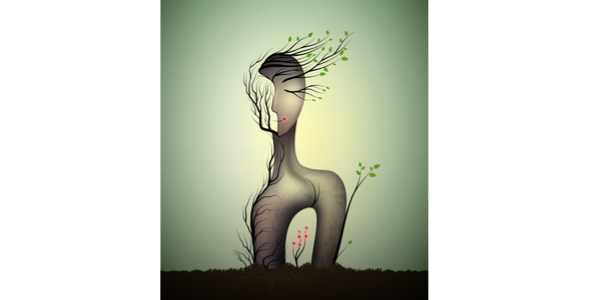
I am a mighty tree, strong and constantly expanding into the world around me. Yet I am flexible and can withstand whatever weather comes my way because I am rooted, and those roots go deep. I take nourishment from the elements that support my growth. I no longer look for sustenance from sources that can not provide what I truly need to thrive.

I live in light today. There is darkness, yes, but it is a different kind of darkness. I no longer fear the dark places, because I am always there. I trust myself to see myself through whatever comes my way.

Inspired by The Daily Post Daily Word Prompt: peculiar

With much love and thanks to the gifts and work of Suzanne Connolly.

A Critical Juncture

I am a recovering perfectionist.

In “A Skin Horse Awakening”, I wrote about my perfectionism, and what I believe the genesis of this “ism” to have been in my life. (Or perhaps I should say “who.”) I don’t believe I was born with the affliction of perfectionism.

Let me walk this back. Perfectionism is bandied about a great deal these days. People jokingly refer to themselves as a perfectionist, and we all think things like “Oh, they work really hard to get things right,” or maybe that they are a bit anal (as in detail-oriented,) maybe a little bit OCD.

According to Wikipedia, Perfectionism, in psychology, is a personality trait characterized by a person’s striving for flawlessness and setting high performance standards, accompanied by critical self-evaluations and concerns regarding others’ evaluations.[1][2] It is best conceptualized as a multidimensional characteristic, as psychologists agree that there are many positive and negative aspects.[3] In its maladaptive form, perfectionism drives people to attempt to achieve an unattainable ideal while their adaptive perfectionism can sometimes motivate them to reach their goals. In the end, they derive pleasure from doing so. When perfectionists do not reach their goals, they often fall into depression.

When I say that I don’t believe that I was born a perfectionist or with a perfectionist gene, I am saying that I learned to be hyper-self-critical. I guess maybe perhaps you could argue that my being extremely sensitive is genetic, and therefore in a way that part of my perfectionism is genetic, as in I am extremely hard on myself and yet I am very sensitive to feeling like I am being criticized…maybe that being “so sensitive” is genetic?

If such a thing even exists. I can never know another’s internal experience, what life feels like for them through their nervous and other systems. I can only know my own.

So really, how can anyone, from my family (“You’re too sensitive!” “You are so sensitive.” “Don’t be so sensitive!”) to psychologists/people we label experts at such things be able to say that someone is “highly sensitive” or whatever? What do they mean? Are they really saying we are very emotional? More emotional? What does that even mean?

(I think perhaps it means that they are uncomfortable with our amount of feeling so they label us as “highly sensitive.” A label to explain away their discomfort.)

And if someone doesn’t “feel life”the way I or someone else labeled sensitive does, are they “insensitive” or unfeeling? Just because they do not seem to experience life the way I do, they are less sensitive? You see what I mean? (It is somewhat crazy-making for me, actually.)

Anyhoo. Perfectionism. Not genetic, in my humble opinion.

I learned to be hyper-critical of myself and to expect extremely high standards of performance from myself. I learned to care deeply and to depend greatly on what I thought others’ were thinking of me. To value other’s evaluation of me above all else, especially my own.

This relationship to myself and the world and myself in the world was learned. I learned it from a master, my father. I am not sure where he learned it. I am quite sure he suffered as much from it as I have. I am also sure that he had great regret later in life around the price of his untreated perfectionism on his relationships with himself, the world and the people he loved.

I am so grateful that I am in recovery around this. I do not have to suffer at my own hands anymore, or cause undue suffering in my loved ones out of my perfectionism.

One of the most tremendous sources of help around this for me has been the work of Brene Brown. You may have heard of her TED Talk on Vulnerability. If you have never watched it, I highly recommend it. Seriously, stop reading this and go watch it! Then come back ; )

She has been on my mind the past few days as she posted on Facebook from Houston, where she was volunteering her clinical services, making a plea for donations of clean, new underwear for those recovering from the hurricane. First things first, please take a view.

Here are three ways to give NEW (still in package) underwear. Please keep in mind that we need a variety of sizes for men, women, boys, and girls, including XXL.

1. https://www.amazon.com/…/2O89ZX93O…/ref=nav_wishlist_lists_1

2. Collect new, packaged underwear and mail it to the address below. It’s our local Hillel and they are collecting for us. This is a really great neighborhood or school project. If you’re purchasing, we recommend Hanes or Fruit of the Loom. UFE doesn’t process or give out anything but underwear!

Undies for Everyone
1700 Bissonnet St.
Houston, TX 77005

3. Give cash and Undies for Everyone will purchase wholesale: https://secure.lglforms.com/form_e…/s/uFpr61ITEItxPeN4Lo9zpA

Brene is an amazing woman. I could write blog after blog about her and how she inspires me. It has been through her work that I have had true shifts around my perfectionism.  I mean, I could understand before that I was one, but then what? What do I do to help myself out of it? Through it? She defines perfectionism a bit differently, and that difference has made all the difference in my being able to make shifts and heal. She defines it so:

Perfectionism is a self-destructive and addictive belief system that fuels this primary thought: “If I look perfect, live perfectly, and do everything perfectly, I can avoid or minimize the painful feelings of shame, judgment, and blame.”

She writes further:

Perfectionism is defeating and self-destructive simply because there is no such thing as perfect. Perfection is an unattainable goal. Additionally, perfectionism is more about perception – we want to be perceived as perfect. Again, this is unattainable – there is no way to control perception, regardless of how much time and energy we spend trying.

Perfectionism is addictive because when we invariably do experience shame, judgment, and blame, we often believe it’s because we weren’t perfect enough so rather than questioning the faulty logic of perfectionism, we become even more entrenched in our quest to live, look, and do everything just right.

Feeling shamed, judged, and blamed (and the fear of these feelings) are realities of the human experience. Perfectionism actually increases the odds that we’ll experience these painful emotions and often leads to self-blame: ‘It’s my fault. I’m feeling this way because I’m not good enough.’

To overcome perfectionism we need to be able to acknowledge our vulnerabilities to the universal experiences of shame, judgment, and blame; develop shame resilience; and practice self-compassion.

When we become more loving and compassionate with ourselves and we begin to practice shame resilience, we can embrace our imperfections. It is in the process of embracing our imperfections that we find our truest gifts and strengthen our most meaningful connections.” B. Brown (2009).

Wow. I mean, just yes. And yeah, this is a daily practice. It is a struggle one day, a breeze for the next three days, and then the shit hits my internal proverbial fan and it feels like I am at day -4. And then I feel free of it again. But Wow and Yes. And I’ll take that over interminable suffering in the depths of the hell of my own mind being run by unchecked and uninformed perfectionism.

If you know of what I speak, I recommend her work and any of her books.

It is a lifelong process, but it is truly gratifying to find true relief.

Oh, what a journey it is, this coming to life. This learning to relax into all of the things I used to hate so about myself. To even begin to embrace and yes, even find love for all my parts. Especially the ones most imperfect.

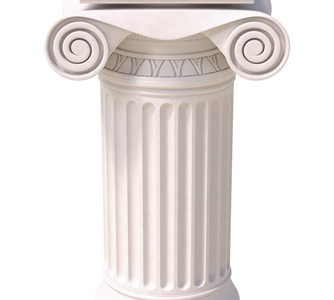
To pull my own self down off the self-built marble column I had constructed so long ago into the real world where I can be with others, be a fully-fleshed human being among human beings. To smash the statue-like full body persona I had so carefully made and let the flawed imperfectly beautiful person I am start to live and breathe and love.


Inspired by The Daily Post Daily Word Prompt: critical

Inhabitant

This body o’mine

Through her I’ve met the world

She’s been gentle with me

But her, I’ve pushed and hurled

She’s taken hard knocks

From without and within

I’ve treated her rough

Lived a life full of sin

She’s asked little of me

Given me all that I’ve asked

Less-than-loving I’ve been

At times, she’s been trashed

I’ve wasted so much time

Hating parts I deemed flawed

The time has come to make peace

And to treat her with awe

I see her now as she is

A miraculous home for my soul

I thank her daily and nurture her

She’s a beautiful part of my whole

Inspired by The Daily Post Daily Word Prompt: inhabit

Pathfinder

Perhaps my way’s not been graceful

I’ve done my best, and that’s not for nothing

At times I’ve lurched or been wasteful

But it’s been my way, and that is something

Inspired by The Daily Post Daily Word Prompt: lurch

Spring Cleaning

Out of chaos and confusion

She cobbled out a plan

She organized her feelings

Wiped the shit off of the fan

Cleared away what wasn’t hers

Took a shine to what remained

Now there’s space for life to thrive

And freedom to be, unrestrained


Inspired by The Daily Post Daily Word Prompt: organize


Going Postal

One of the longest and most satisfying relationships I have had in NYC has been with Phillip, my postal delivery person.

I have lived in NYC since 1987, thirty years the past July. (Wow!)

Since 1995, I’ve had a rental apartment in the West Village, near Bleecker and Christopher Streets.

Over those 22 years, I have gotten to know many of the “lifers” in the building by face. Watched them (and myself) grow older as our stabilized rents slowly rise.

I just know two of them by name, probably only from necessity. My neighbor Orlando, who, in times of unexpected need has helped me over the years in countless ways (and vice versa.) And my super, Sam, who has also helped me greatly in times of need. I have not reciprocated Sam’s help (due to the nature of our relationship,) but I do tip him generously, and I treat him with kindness and respect. I appreciate both of these men.

The neighborhood I live in has changed dramatically over these 22 years. When I moved in, the West Village was iconic: an eclectic, character-filled neighborhood filled with history, grit, spice, color, and diversity. Real New Yorkers lived there. There were grocery stores, corner delis, “Mom and Pop” businesses populating the streets.

Then things started changing in the late ’90s. Many of us blame “Sex and The City” and those damn cupcakes from Magnolia Bakery for the neighborhood’s demise.

Slowly, but surely, high-end fashion stores began taking over leases on Bleecker. Rents started rising, often astronomically. The “Mom and Pops” couldn’t afford them and were pushed out. The people who serviced these businesses with whom I’d developed working relationships disappeared with the neighborhood’s uniqueness.

In the last 17 or so years I’ve seen an ever-changing sea of young people who seem to be fairly affluent come in and out of the landscape of my building. We are now a mainly transitory residential building. The “lifers” have started to die off of move to supportive care.

There are some of us still there, adapting, as we humans do, to the changes in our environment. Holding out, and on, to our apartments.

We grumble about missing the West Village From Before. It had authenticity. It felt alive, pulsing, slightly dangerous, but in a good way.

We curse under our breath at the hordes of people who now walk on the Bleecker of today that looks just like Madison Ave. (At least before the tourists who came were interesting.) Fork out bucks for Starbucks or French coffees and steer clear of the obnoxious lines that still form in front of that damn bakery thanks to food and “Sex and the City” tours.

But one thing has withstood this tsunami of development.

Philip, my mailman.

He initiated our relationship years ago. I’d be out and about running an errand in the ‘hood and hear my name and a friendly hello. There he was. Philip.

I learned his name, and over the years grew to really appreciate him. Not just for his warmth. He always puts the mail in my box in a very organized way: no cramming or stuffing items willy-nilly.

When I go out of town, without me having to do anything, he holds the mail for me, leaving a test item to see when I am back.

He is an excellent mailman who goes above and beyond, and I reward that as best I can at holiday time.

But the best part is running into him in the ‘hood or in the vestibule. Something fills me when I see his welcoming face.

I don’t think I am alone. I sense that we both cherish the personal, familiar connection, the moment of old neighborly warmth, as we navigate the changed waters of our West Village surroundings.

When I hear my name and that “Hello!” or when I see him and call out “Philip! How are you?!” I am flooded with something I can’t quite name.

When I walk away, I feel lighter and happier.

Philip matters to me. I am so grateful I am on his route.

Together, maybe we can keep the spirit of the Old West Village alive, as best we can.

“Neither snow nor rain nor heat nor gloom of night stays these couriers from the swift completion of their appointed rounds”

Thank you, Philip, for being not just the greatest postman in the world, but my neighbor.

I need you now more than ever.

Inspired by The Daily Post Daily Word Prompt: delivery

Anti-glare

Some time ago, I decided it was time to eradicate the “glare” from my roster of habitual modes of communication.

Let me back up a bit.

I come from the sorta South, Texas. Between my southern upbringing and being a female, early-on I developed-through-osmosis the skill of passive-aggression.

Being that I grew up in a family of Olympian-level champion passive-aggressors, I became quite an expert-level practitioner this behavior myself.

Then I married a man who cannot tolerate passive-aggression. He highly values directness and being able to “feel” a person and match that to what they are communicating in words and actions. It is really important to him, for various reasons that are his own to explore and not mine to share.

He challenged this in me, and I rose to the occasion. I began to own this learned and honed behavior, to forgive myself for it, and then to make different choices.

In due time, I decided that I wanted to eradicate it as best I could from my palate of expressions. I decided that I wanted to be direct in my conflicts.

Gone would be the days that I would silently glare at someone, hoping that my glance would convey all that was burning within me.

Like all those times to the person who just cut me off in traffic. I’d drive by and give them “the look.” (Didn’t seem to really have an affect…but then again, I’d already passed by and was speeding off…) Now I also know that if someone is an asshole driver, nothing anyone else does is going to change them. If they could care about it, they would. The glare will never translate to them.

Or those times somebody is having a very loud (and annoying) conversation on their phone on the bus/street/train/restaurant. Boy, did I give them a look, and more than once, at that. (Yet they never got off that phone…) These people also fall into the category of being incapable of really “getting” it. If they could “get” why it is rude to do that, they wouldn’t do it in the first place. My glare? They won’t be able to take it in.

See the problem? That glare just doesn’t do it.

In such circumstances, it is time to use my outside voice.

To say, hey. You almost killed me there. Be careful.

Hey. You are making us all hostage on this bus.

Hey, man. You are man-spreading. Make room.

No more glaring, for this recovering PG’er.

Here I go.


Inspired by The Daily Post Daily Word Prompt: glaring