Sexual Healing

Growing up in the 70’s, my sexuality was shaped by what are now considered to be pretty tame resources.

Remember that this was before the internet brought free porn into our homes, and nudity and sex acts were the norm in film and television.

It’s true: “free love,” second-wave feminism, women’s liberation, and the sexual revolution were making major strides in the 1960’s and 70’s. The 70’s saw many influential innovations. Edible underwear was invented. (Still being sold today.) Video Home Systems (or VHS) and Beta Systems were made available to buy in the mid-late-70’s, which the porn industry apparently mavericked for their retail use.

Like many middle class Americans, my parents didn’t have a VHS machine until the 80’s, so videos were not available to me. (We were also the last family I knew to get cable. My parents were against paying for TV for some reason. Maybe there were late night cable porn resources around in the later 1970’s, but not in our house.)

Despite there being many women who were battling for my future and the future of many young girls like me against the woman-as-sex-symbol stereotype, I remained steeped in the cultural and mass media imagery, messages and attitudes that kept that stereotype alive and well. And boy, did it all do a number on me.

I grew up in Houston, Texas, in a mostly white, middle class neighborhood.

Other than my brothers and the time this one guy was driving around the neighborhood without pants on, fondling himself, asking kids for directions, who I had the misfortune of being “exposed to,” I was not exposed to male nudity as a child.

But female nudity abounded, and shaped not only how I thought about myself and my body, but how I thought everyone else thought about me and my body.

So much so that the “me” in the sentence above and “my body” became synonymous in my mind. I WAS my body. My body was me. As in, I based my entire self worth on my appearance and whether or not I felt men were attracted to me.

(I still struggle with this encoding. But I digress. More to come on that later.)

Though I was born into the “Golden Age of Porn,” the “porno chic” years of 1969-84, I was not exposed to any of the films that were made famous during those years, notably Warhol’s Blue Movie, Mona, later The Devil in Miss Jones and Deep Throat. (They probably didn’t make it to mainstream theatres in Houston at the time, but even if they had, I’d never have gotten to see one.)

But we had magazines. Playboy and Hustler. Others. It was the photographic depictions of women in men’s magazines that primarily influenced how I saw myself as a woman.

My first memory of seeing and being influenced by a photo of a naked woman was actually a record cover, and this woman was not exactly naked. It was the cover of Herb Albert & The Tijuana Brass album “Whipped Cream and Other Delights” (1965.)
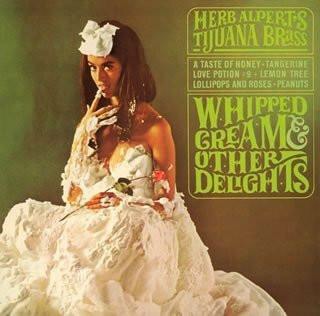

This was one of my parents’ favorite albums to play. I heard it often from an early age, and I loved dancing to the music, making up dances to the songs, which were saucy, sexy jazz concoctions.

But more than that, I was obsessed with the woman on the cover. I was attracted to her. (Maybe it was the appeal of the whipped cream. I was already way too into food: my eating disorder was gesticulating already.)

But it was more than that. On some level, I knew she was considered exciting, attractive and desirable, and I wanted to grow up to be just like her.

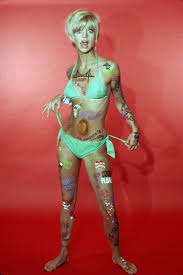
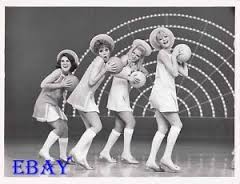
Also, TV shows such as “Love, American Style” Rowan & Martin’s “Laugh-In” were popular during my early years. Both had racy sexual references and innuendo and young women dressed in sexy outfits. From these shows, I learned that if you were sexy and young, you got positive attention from men. Think young Goldie Hawn dancing in those strobe lights in that green bikini with her painted body. The young women on the show actually wore babydoll dresses and Mary Janes because those were in fashion. Talk about confusing messages!

True story: If little me was asked at the time (when I was 4 or so) what I wanted to be when I grew up, I said “a go-go dancer.” I even had little patent white go go boots at 3!
images-2.jpegimages.jpeg

These were my role models. This was the kind of woman I wanted to be!

Later, I found my brother’s girlie mag stashes and would go in when they were out to pore over them. I was fascinated by the women’s bodies, so different than mine. I knew that I fell way short, but I remained hopeful that maybe someday, with enough hard work, I could create a body close enough to rate some man’s favor.

When I was old enough, I started to read the articles (yes, I really did) and the infamous “Letters to Playboy.” These were my education in what was interesting to men about women. Through them, I discovered what men really thought about women. What they really wanted of us. And it all had to do with our bodies.

I learned that I was here to be attractive to men. That what I looked like and how attractive men found me was my purpose on this earth. That there was little value to me other than my sex appeal, and that if I wanted any happiness on this planet, I better work hard to be and stay appealing to men.

And so I did. I became the perfect female consumer. I bought into it all hook, line and sinker. The beauty products, the clothes, the way of being in the world.

I transitioned from my brother’s hidden away men’s magazines to the magazines of my adolescence. Though they were women’s magazines – Teen, Cosmo, Glamour, to name a few – the messages of their content were actually perfectly aligned with the former’s messages about the female role in society. In these magazines I found my road map, the formulas for winning and keeping a man, 100 ways to keep him satisfied in bed, and how to stay looking young and sexy forever.

Every issue of these magazines had different versions of these same themes, over and over. (And if you buy these kinds of magazines today, they still do.) And I bought them and bought into them all, every time.

How I related to boys and then men was all shaped by that early imprinting. I look back and feel like I didn’t really get to have real relationships with men (and women — since they were always the competition for the men) until much later in life. Because through all my dating and early relationships, I was living from the outside in, trying to be the women I had seen in those magazines pages. Trying to find and live the life promised to me in the ads in the magazines and on TV if I succeeded in making myself into one of those women in the pictures.

It took several years after moving to NYC as a young woman for me to learn how to leave my apartment without make up on.

It has taken many more years for me to unravel all of that social and cultural conditioning to find within my own idea of being a woman, of my own sexuality, of what I feel is my intrinsic value and purpose on this planet. It turns out, none of it depends on what men or society think of how I look.

It has been a tough going, this “unlearning.” I was thoroughly brainwashed. I drank the Koolaid. Despite years of hard work to reprogram myself, I still find little pockets within me that harbor beliefs like that Victoria Secret models are better people and deserve more than women like me. Or that if only I looked like this model or that model, my life would be perfect. Little pockets of self-hate that dismiss my worthiness as a human because I do not have large boobs and perfect thighs.

There’s still a part of me that is scared writing this blog post. That I will be labelled as “ugly” just thinking these thoughts/going against the grain.

I take those parts by the hand when they reveal themselves to me and I whisper the truth in a loving tone and tell them I am so sorry they have ever felt anything less than beautiful just as they are, inside and out.

Today, I try my very best to love my real body. I pour my resources into that. (I no longer buy those magazines nor do I need they ideas they sell.)

I love being in my body, and I love my awakening true sexuality. I love feeling desirable. (Who doesn’t?) But I no longer seek to feel this feeling from outside of me.

Today, feeling attractive and desirable is on my terms, made from an internal collage made out of my true essence  – what I like and feels good to me. This inner imagery replaces the old template.

There is no longer a buxom babe at the centerfold of my spirit, beckoning to me with promises of happiness and fulfillment if I am able to become her.

There is me, and the unique beauty that I bring to the world this time I am here.

Like many women my now-age, I look back at the loss of all that time trying to be a sex symbol as a tragic loss of my life’s precious energy.

I waste no more such precious time today.
 

Inspired by The Daily Post Daily Word Prompt: edible

True Grit

My Dad and I had a very complicated relationship.

There were years we barely spoke, by my choice.

Our relationship was damaged in my early childhood, and afterwards, it was always in one phase or another of dysfunction.

I reached a point in my adulthood where I decided that it was best for my health to remove myself from the dynamic. And I thought that would pretty much be it for the remainder of my life, and I was OK with that decision.

Until, that is, my mother’s cancer.

Life is funny that way. You can think that a part of your life is beyond repair, and then lo and behold, Life brings you the only exact set of circumstances under which you would ever come together again.

In 2005, my mother was diagnosed with lung cancer. She underwent radiation therapy (two rounds) and then chemotherapies (2.) I traveled down to Texas to visit often to be with her, me tersely tolerating my father, and he giving me a wide berth out of hurt respect of my former choice. (I also always took my then-boyfriend with me as buffer.)

Then in 2006, after the family gathering at Christmas, which was more uncomfortable than usual, my parents called to tell me that they had been informed by my mother’s oncologist that no more could be done for her. (I will never forget the agony of that call.)

Just like that, all bets were off.

It had been decided that she would be having home hospice care to make her as comfortable as possible. As happens in such situations, we were still hopeful that she could live for some time. No one can predict how things will really go, you tell yourself.

I started going to Houston weekly to be with her. My father and I, out of necessity and shared concern, began to interact more and more, all having to do with her and her health needs.

We found our way to something new, something beyond the pain of the past, for her sake. And later, after the inevitable happened, for ours.

In the weeks following my mother’s death, my father was diagnosed with acute myeloid leukemia. Now, my father had been a strapping, big and tall and healthy man his entire life. Never much more than allergies. But I think the stress of losing his beloved sweetheart of 54 years created the perfect storm in his system, and the cancer that might have lain dormant for years just took over the weakened man.

In the midst of undergoing tremendous grief (he’d also lost his father the year before,) my father had to make decisions regarding his own illness, which was acute and generally swift-moving. The standard treatment available was quite harsh. He decided to go an alternative route in order to potentially benefit others by entering into an clinical trial at MD Anderson Hospital to receive experimental drugs instead of the standard approach, which was tough to survive in and of itself.

So I continued my visits. My remaining brother lived in Houston, so he became the primary caregiver, which I was grateful for. But I went down as often as possible and our new relationship began to grow into a new chapter, slowly, carefully.

And in the year following, when one of my two brothers also died, unexpectedly, again, all bets were off.

I watched this man who was so complicated for me, who had hurt me in such far-reaching ways, suffer the loss of his lifelong love and his son. These losses broke him apart. He went through pain that I would not have wished on my worst enemy.

(And he was my worst enemy.)

Somewhere there in the midst of it all, after a lifetime of seeing no way to ever being able to forgive this man, I suddenly was able to see that he was worthy of my forgiveness. That I had been given forgiveness in my life, and that he, too, should be given that as well. That he was not beyond forgiveness, in some separate category unlike anyone else on the planet.

I guess I was finally able to see him just as a flawed man, finally, and not as the monster I had experienced and protected my heart from for all those years. (Perhaps justifiably, one might argue. But things had changed. And those changes had allowed for a shift of my perception. And that shift allowed yet a new phase of our new relationship.)

In the remaining time of his life, we found our way to a loving father-daughter relationship.

How did this miracle happen?

I think for me, part of it was seeing the sacrifice and the bravery with which he committed himself to surviving his cancer for those of us who remained and loved him.

I know that in his heart he was grief-stricken and lost without my mother and would have loved nothing better than to close his eyes and just let go, to die and be with her. But he fought on, for us.

And after my brother died, that grief was multiplied by 30, and yet still he fought on, for my remaining brother and I. My then-boyfriend-turned-fiance after my mother died, and in the midst of it all we were planning a wedding: a wedding my mother and my father had always wanted for me. He was fighting to walk me down the aisle. And to carry her memory on for his two young grandchildren.

He withstood grueling chemo treatments and daily hospital trips where he sat for hours going through the process required of his treatment. Hours spent sitting and waiting and getting tests and giving blood and getting chemo. Medications at home. The affect the treatment had on his body and spirit. His diminishing physical strength.

This big and tall, towering Texas man became a thin wisp of his former self, eventually walking with a cane.

And through it all, he never once complained.

Three months before my wedding date, he got a virus caught during one of the daily hospital visits. I went home on my usual trip but this time visited him in the hospital, where he had to be in a protected environment.

There, I could see that he was truly exhausted. Spiritually. Emotionally.

That the true grit that had been getting him through, that amazing reserve within that he had been tapping into for so long for our sake, was nearing empty. He had been fighting to give me these last acts of fatherhood, this time of repair, this time of untainted love. I knew this and I was so very grateful for it all. I knew that this time had been a supreme gift that would change the quality of my remaining time on the planet for the better. That my whole relationship to life had shifted for the better.

And so I gave him the last gift I could give him as a daughter. I gave him my permission to let go of the fight.

There are times when life provides you with an open door, and if you are paying attention, you see it and you walk through, somehow knowing that it is what you should do.

When a moment arose in the conversation that invited such a thing to say, I took it.

I told him we loved him and were thankful for everything he had been doing. For how hard he had been fighting for us, to be there for the wedding and for the kids. But that I would never want him to stay on if he truly no longer wanted to. That he had done it all, he had fathered through like a warrior, but that if, at any point, he was ready, that we would want him to let go. That we would be OK. That I would be OK. That he and I were OK.

It was just a few sentences. He knew and I knew what we were saying to each other. He said he wasn’t at that point quite yet but he could understand a time of coming to that point.

When it was time to leave, I told him I loved him, and meant it. I thanked him for being my father, and I meant that too. And I thanked him for fighting so hard to be there for me.

He passed away the next week, after returning home, having come through the virus. My brother found him laying alongside the bed, as if he’d gotten up in the night and collapsed.

I hope he felt at peace when the moment came. Perhaps he was walking towards the sound of my mother’s voice. I like to think so.

My love for him is complicted, yes. But it is true. As true as the grit that he was made of.

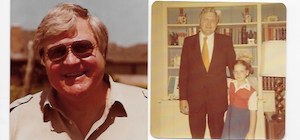
2009-07-24-15-22-58-e1499812592237.jpg Dad and I at the civil ceremony of my marriage, 8 mo before he died.
Inspired by The Daily Post Daily Word Prompt: grit


Constant Craving

When I was a girl, I lived for food.

The promise of the after-school snack kept me going through the grueling days of my youth. I’d race home to find sweet and savory relief from the confusion of adolescence.

I’d eat from a box of graham crackers, spreading layers of vanillla chocolate chip canned frosting. Or I’d slice up a Snickers bar the way they did in a commercial on at the time, pretending I was in it. Then maybe some Lay’s potato chips. Maybe a Wonder Bread/Gulden’s Mustard/Kraft cheese and baloney sandwich.

I was on my own, so I could eat like I wanted to. No father home yet to bring tension and self-consciousness to the air.

I’d fill myself, quelling the uncomfortable thoughts and feelings that haunted me at any other time of my day. This was all mine. My time free from criticism, pressure or fear.

Over the years, I became desperate around this intimate connection with food. Protective of the rituals. The private pleasure I found in food and the act of eating it.

I knew something was off about how I related to food. I felt ashamed and like there was something wrong with me, while at the same time feeling like it was crucial to my very existence. That trichotomy created a painful struggle inside me of shame and appetite and need.

I became secretive around it, knowing on some level that I was not like other people.

I now understand that somewhere along the way, I learned to equate food with so many things I needed: love, attention, security, connectedness, relief, quiet, peace, pleasure, a sense of having something for myself, a way to feel like I had control of one thing in the world.

I believe that some of this relationship to food was learned, familial. My mother, too, sought refuge in her treats. She loved candy, and when I came home from school, she was usually lying in her bed, reading mystery novels, eating candy from a stash she kept in her bedside table. She, too, at some point in her life, reached for food to solve and resolve being on this planet.

I understood her for this. I feel such compassion for her. For her huge needs and the dysfunctional way she had developed to cope with getting them met.

It has taken many years of unraveling this connection for me to find a new relationship to food. There’s been tremendous loss in it. A loss of my friend, my savior, my companion, my sidekick.

But it has been so freeing, too. I have  been learning how to give myself what I had asked for from food all those years: love.

Sounds easy, and obvious, right? But what does that actually look like?

It looks like this: giving myself The Five A’s of Love: Attention, Acceptance, Appreciation, Affection, and Allowing.

(The Five A’s concept is from the wonderful book How To Be An Adult in Relationships – Five Keys to Mindful Loving by psychotherapist, David Richo, PhD.)

Those Five A’s satisfy the snack craving every time. I’m not saying I don’t still crave and even miss that snack eating ritual. I do. That’s a deeply embedded habit. I got pretty hard-wired around it.

But today, I take the snack-seeking girl inside by the hand, and I ask her what she really needs. 

Sometimes it is some appreciation for all I have been doing all day.

Sometimes it is affection. Maybe a bath. Some demonstration of loving care.

Maybe it is the need to be allowed to really acknowledge feeling afraid, or spent, or angry.

It took awhile for that part of myself to trust that my needs could be met in new ways. To trust in something other than food.

To trust life. To trust love. To trust loving myself, in life.

It is an every day practice, this mindfulness of love. I pour the energy I used to hold for food into other things. Sometimes I wish I hadn’t gotten my wires crossed, that food wasn’t so complicated for me.
But it is.

And so I accept this truth as if I were diabetic, and I do what I need to do to care for myself.

Mostly, as I said, I feel free.

I no longer carry that shame I felt around it. I am literally lighter in spirit. That feeling is the prize I keep my sights on. It is what makes it all worth it.

I may no longer “have” snacks. But I have me.

Inspired by The Daily Post Daily Word Prompt: snack

Bottleneck Love

When hate clogs the flow

Love is hard to find

It’s elusive for good reason

Don’t forget that it’s blind

Reach for bottles and bags

Try to wipe it all out

But that’s the big cosmic joke

You can’t get the love out.


Inspired by The Daily Post Daily Word Prompt: bottle

For my father: Keys Alexander Curry. May you rest in peace and know that love does indeed conquer all.


Love Appraisal

 
What is the volume of a heart
Can the love contained within be measured
In liters or meters
Does it even carry weight
Or is it like air
You calculate the mass
What would normal pressure be
Would the mass increase when in love
And decrease when heartbreak sets in
What is the volume of a heart
When heavy with grief
Does sorrow tip the scales
Or does love forever keep the balance
And its value never depreciate

Inspired by The Daily Post Daily Word Prompt: volume


Broken Lineage

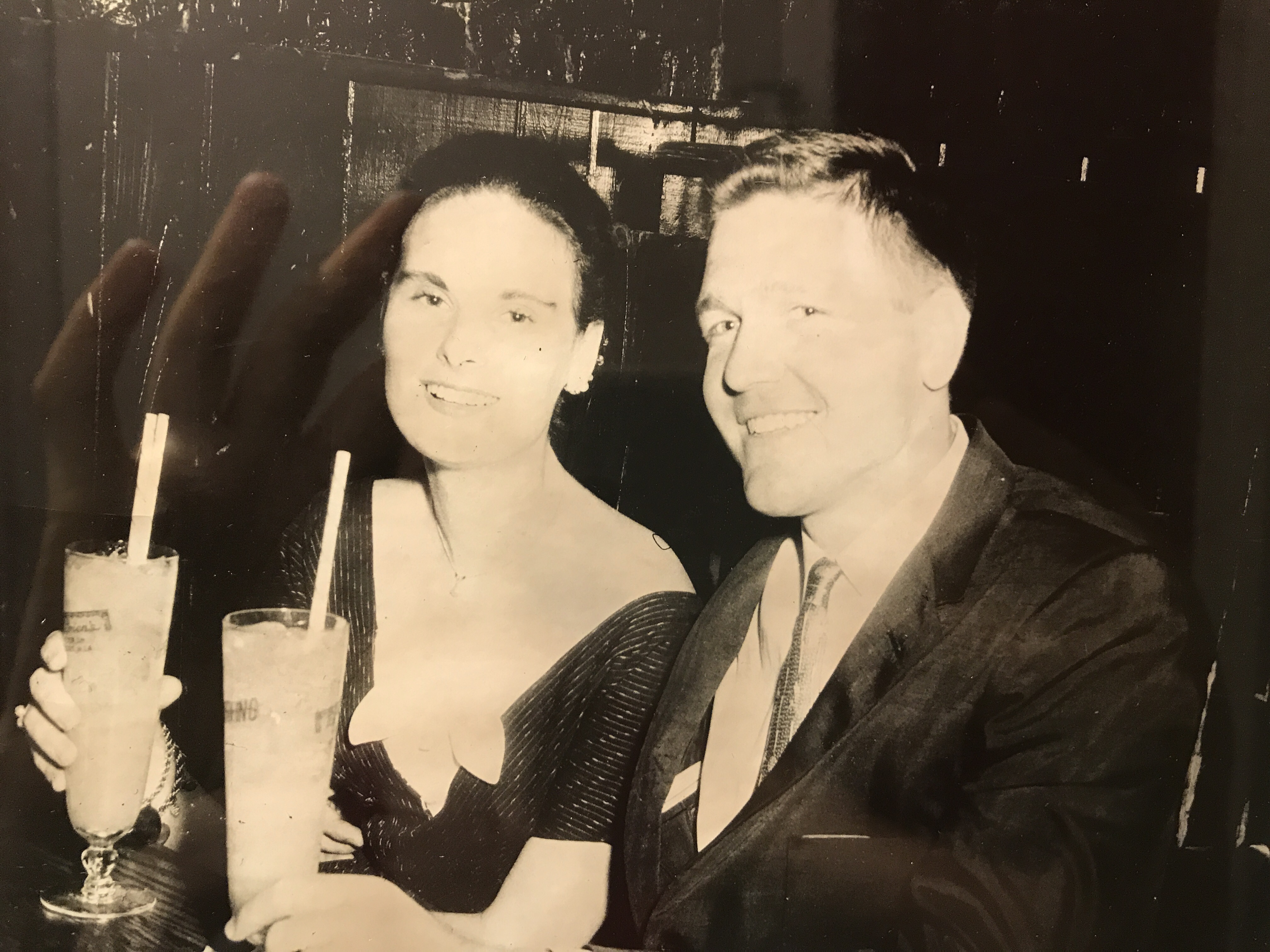
When I was in my mid-20’s, my father made a revelation to me.

In the instant he told me, it was if suddenly, an off-feeling I’d had my whole life until that moment suddenly made sense. Something aligned within me. My relationship to the world felt different. It felt like the earth turned just a bit on its axis and snapped into place after having been off for so long.

I felt like I could breathe just a bit easier after a lifetime of holding it in just a little.

My Dad and my mother sat me down and the story unfolded. My father had been at a work conference in Galveston, TX at which he was to speak. As she always did, my mother went along.

She stayed in the hotel when he actually went to the event that morning. Before the event, there was a meet and greet in the front area of the arena. My Dad had on a name tag, as did the other guests and participants.

At a certain point he noticed an older woman looking at him form across the room. Later, she approached him, and he recalled thinking she seemed hesitant about talking to him. As they began to small talk, he looked down at her name tag, and commented, “Hey, that’s funny. We share the same last name.”

He said the woman sort of paused a moment as if considering what to say next, and then suddenly blurted out, “I’m Rose Curry. I was your father’s first wife.”

She went on to explain that she’d been married to my grandfather and that they’d had a son together, my Dad’s half-brother. They were long-since divorced, and agreed not to have contact or tell anyone about the child, but her son had always known of him had always wanted to contact my grandfather, his father.

She and her son both lived in Galveston, and she had seen in the paper that my Dad was speaking. She had not been sure of whether or not to come.

My Dad says he went into a kind of shock. He doesn’t recall anything else about the conversation or the event. He gave the speech somehow and then afterwards went back to his hotel room.

My mom said when he walked in the door, he was white as a ghost.

He recounted the story to her, and they posited that perhaps it was someone looking to grift some money out of him. He was sure that his father could never have been married before, much less have a child and not tell anyone about it. Surely they were just looking to demand some inheritance or something, claiming to be relatives.

But curiosity got the better of him. He looked through the phonebook and found the name of the man that Rose Curry had claimed was his half-brother, and he called the number. He spoke to the man, and they arranged to meet that afternoon in the parking lot at a McDonald’s.

And my Dad said that the moment he saw the man get out of his car and approach him, he knew that the story was true. He could see the resemblance clear as day.

He spoke with the man for several hours. It turned out that this man, my half-uncle, had tried several times over the years to re-connect with my grandfather. He’d gone to Midland, TX (halfway across the state) to his house and rang the doorbell, only to be turned away in the snow.

He’d even called my Dad’s house once, at holiday time, in the hopes of speaking to him.

He’d had a tough life, struggled with depression and alcoholism.

My parents told me that after they left Galveston that day, my father had talked to my grandfather about the man. But my grandfather wanted nothing to do with him. As he had turned him away so many times over the years, so he turned him away again.

I. Was. Floored.

Suddenly, my whole childhood made sense.

I’d always sensed an indefinable energy around my grandparents’ house in Midland. They were loving people. I loved to be at their house and around them. But they didn’t leave home much. And there was a tension that I could feel as a child, something I could not make sense of. I guess I always felt that something was about to happen. Something bad. It felt like we were always on hold.

Hearing the revelation of this first family of my grandfather’s, it all made sense. That energy was the energy of holding a secret together.

My grandfather had been married and met my grandmother and fell in love. He had left the other woman, and their son, and they’d divorced. My grandfather’s side of the family knew, but were sworn to secrecy. My grandmother’s family and the family she and my grandfather would make together were not to ever know.

My God, that takes a ton of energy, to hold that big a secret.

So every time there was a knock at the door…every time the phone rang…they must on some level had been thinking would it be someone who knew the dirty dark little secret?

I remembered a man coming to my grandparents’ house at Christmas. My grandfather going out and talking to him on the front yard, coming back in angry.

(Now I know it was him.)

I was at the Thanksgiving dinner table when a man called interrupting dinner, asking for my Dad. My Dad came back to the table saying “some guy had just called and as said he was his brother, must be a wrong number, the guy sounded drunk.”

(That poor man trying yet again.)

Secrets are powerful things. They create an energy, they take up space. As you work to hold them in, it takes away from the living of your life. Every relationship feels that weight in some way or another.

As a sensitive child, I sensed it all. But no one would say a word.

I was close to my grandmother, but the one time she ever got mad at me or denied me anything was when I asked her in college for some family history. She refused to help me. I was so confused by her behavior at the time. It was so unlike her.

But once the big secret was outed, it all made sense.

My idea of my grandfather was forever altered on that day. My grandfather and my grandmother, but she had been dead for some time.

I never spoke to my grandfather about it. I had wanted to, but my Dad said not to, and I complied. I guess I have been conditioned to accept the weight of lies.

Sadly, he never agreed to have contact with the man who was his son, my half-uncle. I never met him either. All involved parties are dead now.

I remain. And I seek to be sure that I live life lie-free. Lies cost too much, and they can never be held forever.

I had a half-uncle. I wonder what he was like. I hope his children and their children have also broken the chain of lies. You can only hold the Truth at bay for so long.

Inspired by The Daily Post Daily Word Prompt: revelation


A Perfect Ten

I was always ashamed of my hands as a child.

I bit my fingernails. I was always picking at the nail bed and tearing the nails. Though sometimes I made them bleed, there was a weird pleasure in the pain of that self-destruction in the moment it was happening. Later, regret set in, and then shame.

As a young girl, I would make play fake nails out of Elmer’s glue and stick them on, pretending I had lovely, long nails like the women I admired on TV and in magazines. They did not stay on very well, however. Just a few, brief moments of the illusion before they fell off, semi-hardened ovals of Elmer’s again.

I also had what I considered a misshapen right thumb. It was shorter and wider than my left. I hated my right thumb and it’s squat ugliness. I would sit on my hands in elementary school. Didn’t want anyone to see my defect, fearing it as outer proof of my innate defectiveness.

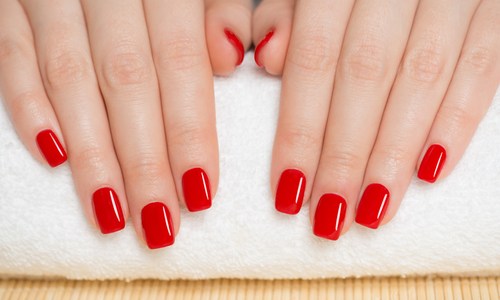
Around the summer between sophomore and junior years of college, I discovered artificial, or acrylic, nails. There were also, at the time, inexpensive, temporary stick-on nails available in stores, but for whatever reason, I never tried or trusted those. They were too obviously fake. They would never pass as my own. (So I would never pass.)

But the acrylic nails? They were an answer to my prayers.

These artificial nails were not a replacement, but an extension for natural nails. They involved the application of tips made of lightweight nail-shaped plastic forms that are glued onto the end of the natural nail. They would then don masks and brush on acrylic powder to cover the nail. Then an artificial nail is sculpted out of the acrylic and shaped and buffed to a shine.

In over an hour’s time spent in front of a nail salon employee, I, too, could have perfect, long, beautiful nails.

But the best part of it all was the polish.

I chose the richest and darkest red being made at the time. This was before get manicures and the myriad of colors of polish in fashion today.

I was drawn to the red. I had always loved old Hollywood glamour, so I guess that influenced my taste. Subsequently, I also started wearing red lipstick to match. It became my signature look in my last two years of college. (I also wore a lot of black before it was chic. I got a lot of comments on all of these things. I didn’t mind the attention as long as my nails were perfect.) My nickname was Maybelline.

After discovering acrylic nails, I fell in love with my hands. I felt more attractive in every way. Suddenly, my hands were available for self-expression and communication in a way they had never been before.

Great, right? So what if I had to pay a fortune. So what if I had to spend two hours each week in the nail salon breathing what must have been toxic fumes and having toxic substances put onto my nails in order to feel whole and worthy? Small price to pay if you ask then-me.

The problem is, when you rely on an external factor of your appearance for your sense of worthiness, you are depending on something that is transient.

And acrylic nails, while petty durable, were known to break off at times in-between salon visits. They were a system not without flaw.

If my acrylic-enhanced nails were less than perfect, I felt unpresentable, imperfect. Life had to stop until I could re-perfect myself again. But salons are not open 24/7. So that meant hours of waiting, feeling awful, until I could be restored to lovability again.

I remember literally plummeting to the depths of despair one time bowling with friends.

I am right-handed, so I was using my right hand to bowl. My “special” right thumb had trouble fitting into the thumbhole of the ball that fit the rest of my grip. It was a bit snug for it. And, well, you guessed it, disaster struck.

There I was, in all my shame, my deformity not only exposed but highlighted. The naked odd man out against perfect and polished siblings.

When I think back, I feel compassion for the girl I was then. Sad that my entire esteem of self was riding on such a superficial thing as my nails. But it was.

It took some years after college to begin to learn to let that kind of outwardly-obsessed perfection go. It symptomatically focused on my nails then, but that was not the only area of my appearance that suffered.

I have had to delve deep, to find my core self, the self worthy of love, having nothing to do with externals of any kind. I am still working on that one.

Perfectionism and obsessive-compulsiveness seem to be a shape-shifting animal that morphs from one area to another.

Whereas over the years my perfectionism has often been fixated on my appearance (nails, weight, sustaining a youthful appearance,) in the last 15 or so years it has also been on my career and accomplishments.

I am still working to find full value in myself just as I am. Nails or no. Big acting credits or no.

Today, I try to love who I am, how I look, just as I am. I try to enjoy the work I get and to treat every job as if it is “big time” because in my heart of hearts, where I don’t care if anyone else is looking or not, it is.

In over words, I am trying to live from the inside-out.

It is challenging. The outside world with all of its social media trappings and the business-of-acting business bytes is like a siren call that draws me off course to crash on the rocks.

Am I doing enough? Am I meeting the right people? Do I have the best headshots? The right representation? Am I in the right mindset? Am I relevant? (Yes, I have actually just recently gotten an email from an industry professional who council actors suggesting that as the focus of what actors must ask themselves. To whom? In what regards? And what if I am not relevant? Does that mean I should just stop pursuing what I love?)

And then there are the ever-present questions of well-meaning people: What have you been doing? What have you done that I would have seen you in? Anything big? Are you doing anything important? Yikes. So easy to slip off my own core-driven track of loving what I do and start to question my validity. Easy to feel lost at sea and doubt that I am on the right path, despite having a map that I love right in my own hand. Easy to feel like I have to use yours or hers or buy a new one in order to be marketable “enough” to feel worthy.

But thankfully, I know what is what. I may have to work hard to stay centered within my self some days, navigating the seas of the outer world that used to have such reign on my sense of worthiness, but today, I know what is what. And that is huge. I recognize the siren calls for what they are. I can course correct back to my own route.

I confess, I do still love nice-looking nails. Today, we have gel technology, so I only have to go to the nail salon once every two weeks. (I can barely stand to be in there. Some people love it. I just spent too many hours there for the wrong reason in the past to enjoy it. It is a reminder to me of where I have been. I do not want to go back to that.)

I have a new signature nail polish. It is called Always and Forever. It is a purplish nude matte color that is subtle, like a pink or a white without being pink or white. It is different, unusual.  I love it. It suits who I am right now. Next year, it might be something different.

I do still wear red every so often. I enjoy the bright red shock of color. I always feel a bit more glamorous when I wear it.

My nails do not have to be perfect today. Neither do I. I am the captain of my own career ship most days, and the sailing is fine.


Inspired by The Daily Post Daily Word Prompt: polish


Wax Poetic

My heart needs a buff

It’s long lost its shine

I tried to be tough

Tried hard not to pine

But enough is enough

I must draw the line

Smooth out what’s rough

Act as if it’s divine

Get rid of old stuff

Start to care for what’s mine


Inspired by The Daily Post Daily Word Prompt: buff


Apocalypse Wow

When I was around age 20, my life exploded. My entire world literally blew out from its center.

Looking back, I suppose it was destined to detonate at some point or another.

I oscillate between feeling sadness that it did not happen sooner and gratitude that it did not take longer to happen.

Spiritually-evolved and wise people would say that it happened “right on time. ”

I say “Bite me.”

(OK, I got that out of my system. Sometimes I feel sorry for myself. Maybe we all do. We all have our crosses to bear in this life, right?)

No, seriously, I guess it did have to happen sooner or later.

At that point, I had been away from home for several years…the deep truths that had been bubbling molten hot at my core had had time to gain strength unencumbered by parental presence.

I was also living a breakneck speed: I was a full-time acting student, working a part time job and stage managing productions for the acting company associated with my acting school. I was busy 24/7 and running on fumes.

And then, one day in a bookstore, I was drawn like a magnet to a particular book. (This is the book that was to teach me that I do not chose books but rather they choose me.) It was Alice Miller’The Drama of the Gifted Child.

I bought it and read it as quickly as I could, and shortly thereafter, the volcano of my psyche erupted.

This book seemed to be explaining things about my experience growing up that I had long since hid from myself. It was as if in reading each chapter, carefully placed barriers were loosed around the nucleus of my being.

In the days following reading it, I felt like the ground I was walking on was constantly shifting and moving underneath my feet. It was unsettling.

Pressure within me began to build, until one day, one Sunday shift in the restaurant where I worked, my internal world just exploded.

Shards of self flew from my core, and in an instant, a horrific revelation from within flew up through my body from my gut into my consciousness in a searing flash and the fairy tale fantasy that I had been living inside my own mind of a perfect family and a perfect childhood turned to ashes.

And, just like that, I was forever changed.

From that day to this one, it has been a whirlwind, rollercoaster ride filled with astonishing kindness, loss, addiction, danger, self-abuse, despair, hope, comedy, tragedy, loneliness, desperation, shock, torment, friendship, mentorship, recovery, love, joy, bliss, confusion, celebration, emptiness, wholeness, perversion, goodness, synchronicity, luck, terror, horror, wonder, adventure, growth, overwhelming gratitude and grace, forgiveness, miraculousness, passion, sexuality, understanding, caring, shifting, healing, working, giving, taking, receiving, being lost and being found, again and again and again.

(I suppose that is simply a life being lived.)

I would not change one moment because if I did I would not be right where I am today.

Don’t get me wrong. Right where I am today is not puppy dogs and moonbeams.

In some ways, I feel like I am only now rising, like a phoenix, out of the ashes of that apocalyptic day.

And as uncomfortable, often terrifying and unsettling as that feels, to be in totally unfamiliar territory in my own surroundings once again, I know that I am indeed in the process of rising, like a phoenix, out of those ashes, and that knowing, in and of itself, is pretty amazing.

I don’t know where I will land, or even if I will. But I know that this is my journey, meant just for me, and I am rising to the occasion.


Prompted by The Daily Post Word Prompt: detonate


Split Decisions

I have been thinking a lot lately about trusting life.

I have come to realize that I have been living, but not trusting, life.

What does that mean?

It means that when I was six, things occurred that were so traumatic that decisions were made on an unconscious level that 1) the world was not a safe place, 2) I could trust no one and nothing, and 3) life was not meant for me.

Fast forward through decades of living from the decisions of a wounded child who felt that what had happened was on some level her fault and who also thought that she carried responsibility for the whole world as she knew it.

What does that look like?

It is exhausting to live but not trust life. I am exhausted. I have been dragging my soul through all of these years, cheerleading myself every day to show up despite feeling on deep unconscious levels that life was not meant for me.

It has been a strange dichotomy: wanting to live so badly, to work so hard to have a happy and meaningful life, yet to have an equal and opposite drive in my telling me that life is just not for me. That I was not meant to be happy. To live “in spite of” not feeling as if I deserved a good life or even was a worthy or necessary part of the world.

I have loved life. Needed life. Wanted life. Fought life. Almost killed my own life. But I have not trusted life.

And not trusting life, it has been hard to trust myself. I mean, if you do not trust the very force that sustains you, what can you really trust anyway?

I did, indeed, survive. Miraculous, indeed, because when you live from unconscious wound-influenced decisions from a child’s psyche, you tend to make some very, very poor and unhealthy choices.

I look back at all of the choices I made from those 6 year old’s decisions today, and I am truly in awe. I used to be embarrassed, ashamed even, at how poorly I have managed for some times in my life. But today, I am astounded at my resilience and my ability to bring myself through it all. I survived, and I live to write this.

But I have not yet truly thrived.

I have healed so much. But here I am, having cleared away so much wounding, seeing these decisions that were made about life and my place in it, and I am exhausted.

And it is time. Time to finally trust life.

I have blamed Life for what happened to me when I was six. Life and God. But mainly Life. And I understand why. The pain and shock of what happened was just overwhelming to me at 6. I just could not trust after that.

One of my favorite lines from a play is from Other Desert Cities by Jon Robin Baitz. “Most people don’t have to make a step-by-step decision to stay alive, most people just basically want to live. I am not one of those people.”

I have always deeply identified with that. It has taken me work each day to push through the energies around those early decisions to find the strength, courage and hope to face another day.

But I want to address that. Really see if I can forgive Life — it was not Life that did anything to me. Life is not to blame.

Life has held me through. Life has loved me no matter what. Life has always just been there, offering me breath, love and trees.

I don’t know how I will heal this or how long it will take but I am ready and willing to try.

I can start by making a list of what I think that might look like. If I were someone who trusted life, how would I act? How would I talk? How would I make decisions? How would I love?

Will my smile be different? My laugh? Maybe my very breathing will change.

I am eager to live in these questions, this exploration.

To take my six year old lovingly and gently by the hand and take over the reigns. Give her a soft place in my heart to go play in and reassure her that I got this now. Yes, my child, it is time.

Here we go.