Home

Growing up, I always felt like a fish out of water.

I couldn’t wait to flee the country of my birth…Texas.

Yes, I know Texas isn’t a country.

But in feels like its own country. Maybe because of its size. Or its history. (It was its own country for awhile: the Republic of Texas, from 1836–1845. That independent spirit remains, albeit subtle, after all these years.)

But feeling like it was its own country wasn’t the real reason I wanted to get out.

I just always felt like I was not in my natural habitat. Nothing against it, but Houston, the city of my birth, is very large and flat. Everyone drives everywhere. When I was growing up there, there was no real center to the city, no downtown destination (then) that you could drive to and feel the life of the city the way you can in many major cities.

I felt so…alone. Millions of people lived in the city, but I could never get a sense of where they all were. I’d only see some of them passing by in their cars. Everyone seemed to be going off to places, but where were all the places? There were tons of restaurants and stores and cars and buildings and neighborhoods, but I couldn’t feel where all those people were. I can recall that feeling in my body to this day. It’s an empty-dread-panic that rises from my belly and settles into my chest, squeezing my heart. It makes me want to cry, and my breathing starts to feel pinched off. It literally made me want to run screaming into the streets, looking for, I don’t know what. Some kind of connection. Some kind of belonging?

Yes, I could go to a mall and find a lot of those people. Maybe that is part of the reason that as a child I loved to go to the Galleria, which was a big deal when I was growing up. It had a huge skating rink in it’s center (It was just the Galleria then — has since expanded.) There I could feel some of the people. Unfortunately, being a mall, it was a rather empty-feeling kind of community. I mean, the whole premise revolves around commerce. But it was something.

Sure, I had family and friends. I had some communities. I went to my best friend’s church youth group for awhile. Throughout school, I was in choir and that was a major source of connection. I participated in clubs and such. I eventually was part of a wonderful group of friends in high school and we made our own community, our own clique.

But even with those connections and communities, I still always  just did not feel at home. I literally felt anxious and uncomfortable. Now, there are many reasons for that having to do with other givens of my life. But I am talking at a pure animal level.

Whatever animal I am, my natural habitat is not Texas.

When I was 16, I accompanied my parents to NYC for a big business trip. It was December, and we stayed in a swanky hotel right on Central Park South. And it snowed while we were there. My room overlooked the snow-laden beauty of Central Park, and I will never forget looking out of my window and seeing that winter wonderland. We rode the elevator down one morning with Dudley Moore! I saw five Broadway shows, which forever changed my life.

I was smitten and giddy with the flush of first love. NYC stole my heart the way it does for so many of us. I could feel the people. There was life everywhere. I could stand in the center of the life and know I was there.

Its glittery grime, its sights and sounds, the faces — the diversity! — and the raw urban-ness of it just got under my skin. I just could not stare enough at all the people, their varying energies and manners and expressions. You could argue that because I am an actor, an artist, I was destined to love a place like NYC. But it was more than that.

I was home. I could breathe easy for the first time in my life. I felt like a fish put back into its tank. I was with my people. I was where I was supposed to be. And as quickly as I could manage to, I moved to NYC. And NYC is where I have since stayed.

Today, I enjoy Texas. I appreciate Texas. I like to visit there. Many people I love are there. I see its beauty and its gifts.

But I always come home to NYC.

#NewYorkCityisMyHome

A response to the Daily Prompt: Flee

Holiday Panoply

This week’s blog is a few days early. I wrote this in response to a word prompt via Daily Prompt: Panoply.

My mother was one for panoplies. Not as in the historical definition of “panoply:” a complete set of arms or suit of armor. But as in “a group or collection that is impressive because it is so big or because it includes so many different kinds of people or things.”

She was quite mad for decorating for holidays. From my earliest recollections, she put time and effort into decorating our house for each holiday.

It began with a small Manzanita branch which she spray-painted white. From its branches she would hang little ornaments and such. Perhaps she had seen something like it in one of those women’s magazines of the 1960’s with articles of how to be a good mother, wife and hostess. Those same magazines provided the recipes for many of the staples that she came to cook for us, too. Lots of recipes utilizing canned goods, as I recall. Things like Spam casserole and meat dishes with sauces made from Campbell’s Cream of Mushroom soup.

My mother had grown up in a rather eccentric household. Somehow, she and her twin sister never learned how to cook. My Grandma, their mother, did not cook. Their father, an active alcoholic, did the cooking, sometimes. I am not, to this day, sure how they all managed to feed themselves. But once my mother was married, she underwent a self-education of things such as housekeeping and cooking. With knowledge gleaned from the resources at her disposal then – women’s magazines, popular cookbooks and recipes from newly forming friendships – my young mother forged her way through the early years of starting a family.

At first, the Manzanita branch was decorated for the major holidays: Valentines Day, July Fourth, Thanksgiving and Christmas. But soon this expanded beyond just the basics to the other less widely decorated holidays as well: President’s Day, Easter, Halloween, Graduation Days, even Veteran’s Day.

We all teased her about it. My friends through the years would always comment upon seeing the tree and its adornments become more and more elaborate. But even in the midst of our jaded perspective on it all, there was also a sense of amazement, too.

The Manzanita branch holiday tree became a central figure of whatever house we lived in. From the first little house in the Sharpstown neighborhood of Houston, TX, to the house in Dallas, TX where we lived for a year until my Dad’s business venture failed and we moved back to Houston. To the Briargrove neighborhood house where my Dad started a new company and went back to night school. To another house a few blocks away in Briargrove as his business grew and thrived. And finally to the really nice house my parents bought after I was off to college in the higher-end neighborhood of Memorial.

How it made all of those moves intact is a mystery to me. Those branches are fairly delicate things. But somehow, it survived, and was always a symbol of something constant amidst the changing environments of our family’s life.

Once in that really  beautiful and much larger home, the home that was to be my parent’s last house, my mother’s decorating could really take flight. The Manzanita tree took a much less central role, bowing down alongside the growing collections of decorations. It would still be decorated, but it sat on the kitchen island, a more ordinary display in comparison to the dining and living rooms, which were transformed into holiday wonderlands that could have competed with any department store displays.

I came home for holidays and though I am sure on some level I appreciated it, I never stopped to think about the effort she put into it. (And I never once thanked her for doing it, which I feel regret over to this day.)

I didn’t reflect on any of this until after she and my father died, when my husband and brother and sister-in-love were going through that big, beautiful house, processing our parents’ lives and deaths by going through all of the things they had amassed in their lives together.

The hours she must have spent collecting each item. Putting them all out. Then taking them down and packing them all away again.

The love she must have had for us and for the doing of it. It takes true love to accumulate a Santa collection that literally has its own room. Closets for each season…with shelves and drawers filled with bunnies, Lincolns and Washingtons, hearts, witches, black cats, pumpkins, ceramic figures of patriotic people, stars of congratulations, new baby banners…

It was so hard to let go of those collections. I did not have the room in our small New York City apartment to store or even use all of those beloved objects. But I could feel her in them, as we sorted through and discovered her hiding places for even more of her collections.  I imagine my father must have tried now and then to get her to promise to stop buying things. It was clear that she hadn’t. The joy she must have had in finding each one. The love she must have felt for us as she imagined creating each holiday wonderland for our enjoyment.

I chose to take one object from each of the major holidays. I cherish them today. We found the Manzanita, and thankfully, my sister-in-love (who is much like my wonderful mother in her ways and in her heart) expressed a desire to keep it. She and my brother have a larger home in Houston. I know that my mom would be so happy for them to be using it.

My sister-in-love also chose to keep many of my mom’s holiday panoplies. I now get to enjoy them on our holidays together visiting their home in Houston. I walk amidst the Santas, beautifully displayed and lovingly put up now by my amazing sister-in-love. I take time with each one, appreciating them, remembering my Mom, and her love.

The Manzanita branch is there, now stripped down to its natural color. It is still a symbol of something constant amidst the ever-changing world and our family in it.

#holidaydecorations #manzanitabranch

 Panoply


Stick Season

My husband and I love to visit the area around Stowe, VT. We’ve been going there for long weekends for the past four or five years. We go whenever it works out for our two schedules, so oftentimes we are there at off-season times. Sometimes we can go during the peak seasons that draw the leaf-peepers or ski bunnies out in great numbers, but often we go during the in-between times when the locals can enjoy having their towns back to themselves, or take a break.

The fall foliage is spectacular, of course. Leaf Peepers have been flocking to Vermont for ages to see the hues of color thrown across the rolling mountains like crocheted blankets. There is a vibrancy that is energizing. Walking and hiking through the colored forests is a feast for the eyes and the spirit.

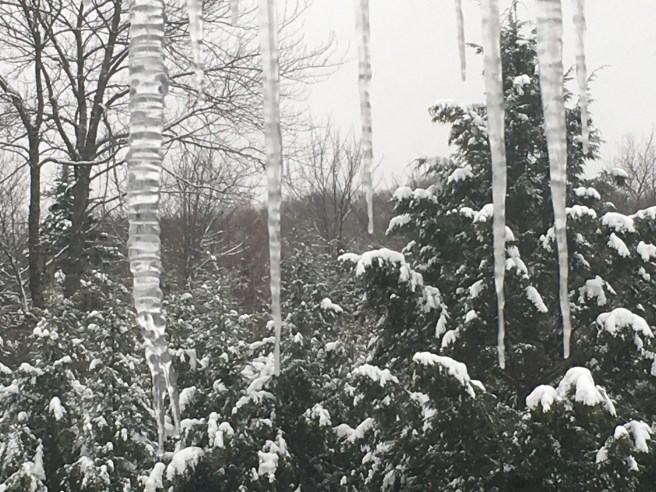
The wonderland that comes from winter – when the trees are dripping with snows and the landscape is white – is quiet and majestic. It fills me with awe and reverence; there is something holy about it. I become entranced by the ice formations that stretch from the eaves, and the swirling, snowy winds. Skiing or playing in the snow is athletic and exciting. And being cozy in front of a fire, winter is meditative and ripe for contemplation and relaxing deeply.

Spring feels like the whole state is mating: Mother Nature is gearing up for a green and pregnant spring and summer. I love the smell of manure for some reason — it takes me back to times spent out in the Texas farmland country near where I grew up. That smell abounds in spring in Vermont, along with the incredible perfume of budding flowers. There is so much promise in spring and summer. Hope and lightness. Everything feels possible.

The traditional four seasons in Vermont are legendary and I love them. But it is the other two that have taught me the most.

We discovered Mud Season one year: some call it the fifth season. At the time, we’d never heard of it. It is the transition between winter and spring when the dirt roads become mucky from thawing snows. It is amazing in its own ways. To me, it feels like the whole state is waking up. It is mucky and messy, a reminder to me that all growth is messy.

Growth requires mess. When I am growing, my life feels almost unrecognizable at times. I often panic: what is happening, why do I feel like my life is falling apart, that I am falling apart. I feel uncomfortable in my skin, even, as if it doesn’t quite fit right anymore.

Now I can know it’s my own personal mud season. I can relax into the mess of it: come to see it as a good sign. It means I am making a deep change and things are thawing out.  I am flooding my own well-travelled roads, creating muck, and from the muck, I will form new pathways, new ways of being within myself and in the world.

Things will clear up again. The world will feel familiar again, a new paradigm shift will have settled. The newness will wear off and I will recognize my self and my world again. New growth will come, and I will flourish.

Just this week, we discovered a new season to add to the five seasons of Vermont beauty.

Stick Season. We had no idea when we booked our trip to Stowe for Thanksgiving break that we had chosen Stick Season. We had called our favorite local restaurant to make a reservation and instead got a voicemail message that said they were “closed for stick season.” I looked it up.

Vermonters refer to the period of time between the foliage season and the snow season as Stick Season: the fall/winter transition after the leaves have fallen and before snow has settled on the trees. Naked trees = stick season.

Now as it happened, in the days before we arrived, there were early snows which thrust us into a premature winter-like Thanksgiving which was gorgeous.

img_3931

But in our last few days there, the temps rose again and the snow melted, and there we saw it: stick season.

I suppose some people may find it stark or bare, the landscape lacking the lush, pregnant greens of spring or the gloriously-colored hues of fall. My husband found it somewhat depressing-looking. I get that: trees are stripped down to their skeletons; the lack of color to the eye. Most of the birds have gone to warmer climes, so it is an empty quiet, not the whispery-full quiet of snow-covered earth.

But to me, there are unexpected gifts to be found in the season of stick.

We could see the structures that are usually hidden by leaves: it was like discovering whole hidden pockets of life within the towns we thought we knew so well. We kept being surprised at discovering homes and structures that we’d had no idea were there.

There were still some shocks of color: subdued colors that are perhaps usually overshadowed by the flashier foliage and fauna of the usual seasons. They broke out against the grey in a muted but welcome visual reminder that behind the brightest and the loudest often stand other beauties valuable of our attention, if we pay attention. Red-browns that were formerly overlooked as they were surrounded by reds and oranges and greens finally had our attention, and my hungry eyes drank them in with gratitude.

img_3932

And the trees themselves, so bare and simple without their normal adornment, seemed elegant and brave to me. I felt I was seeing their core essence, and I could feel their presence and wisdom resonating in different ways than when they overflow with their plumage.

Their stark, bare beauty reminded me of my mother, towards the end of her battle with cancer. I had always seen my mother’s beauty. But at the end, it was if she had been stripped down to some pure essence of her soul. It was as if anything extraneous had fallen away and what was left was the sheer perfection of her human spirit. She radiated a kind of centeredness and a knowing that I could not yet know. She was stunning.

Those trees in stick season felt that way to me. They know things I can not yet know. They know a bigger picture than I can conceive of. I am drawn to be with them, to feel their wisdom, to allow my own excess of spirit to fall away, to strip my own spirit of what I can to get down to the skeleton of who I am. To remember what really matters to me in this world.

Those final days with my mother brought me a clarity of purpose that I had never known before. At her side, I knew I was exactly where I was meant to be, doing the most important work of my life.

It was her stick season, and she knew it on some level. Being in Vermont’s stick season brought it all back to me, that clarity of perspective that being with a dying loved one can bring. It’s one of the many gifts that death can offer.

Stick season. I feel like at this time in my life, I am in a kind of stick season right now. I have the desire to become stripped bare of my habitual ways of being in the world. I am finding out who I really am underneath the masks and the costumes of the plumage of my spring and summer. I am sitting with what is really there in me and letting myself feel naked and vulnerable. I have come to know my pure essence, and I am in the process of allowing my self to be truly seen.

Dead branches drop off healthy, living trees all the time, and wood knots appear in the trunk where branches died. Knots are imperfections that cause living wood grain to grow around them. Isn’t that amazing? In the brilliance of that living and growing wood, knots have formed. They are a testament to the life force within a tree, to their growth ability.

I will no longer hide my knots. I will know that there is a kind of beauty in them, too.

I know that there will be new growth in me again. I will dress again in my plumage, but it will reflect the new colors of what I have found within. Mother Nature gives me comfort and faith in the process of growth: she evidences that truth every day of every year. I need not fear what is happening. It is just Stick Season, after all.

#treetherapy #vermont #theseasons #stickseason


A Table of One’s Own

The idea of it is so appealing to me. I’m out and about, on my own, in the world. Feeling happy…feeling secure…feeling strong….feeling hungry.

I decide to take myself to a nice meal in a nice restaurant. It starts off so well.

I consider different restaurants as I walk around. I check out their ambiance, their menus. I make a decision, and filled with joyful anticipation, I walk in. I approach the host or hostess with optimistic excitement.

And so it starts. It takes a bit longer than I’d like for them to address me. They make some kind of quick appraisal of me, and it is decided on some level that I do not measure immediate attention. They continue with whatever task they’ve decided they do not need to interrupt to greet little ole’ me.

So I wait politely until they get around to helping me. While I wait, I ponder the mysteries of this situation. This is not my first rodeo. I have been here before: the last time I attempted a meal out with myself. And the time before that. And the time before that. Ah yes. Nothing has improved.

What happens in that nano-second appraisal that leads to me being treated as an afterthought? Is it because I seem so amenable? Does my WASP-y middle-class upbringing resonate that I will tolerate a lot in the name of appearing in social good graces? Or is it because I am middle-aged and they do not actually really “see” me, because as studies show, people aged 45-65 are invisible in popular culture and media and therefore no one can really “see” them in life? That doesn’t explain every attempt to eat out on my own I have ever made in my adulthood…the many times prior to middle-age I went solo.

I tell myself it doesn’t matter, I push down the surge of anger that has risen up from my belly. I want to have a nice meal. They’ll deal with me soon enough. Calm down, Norma Rae. Let’s stay nice. Don’t stoop to their level. Maybe we are being a bit sensitive, dear. Don’t be THAT lady. (Yes, I do talk to myself like that. Even I have ingested the cultural attitude towards my own age and sex. That is perhaps the worst betrayal of all in the experience. That internal voice that judges me right along with their judgement of me. But I digress.)

Finally, the hostess or host comes over and with the enthusiasm of a gnat and asks anemically, “May I help you?”

“Uh, yes, you can. I just walked into your restaurant. What do you think I am doing here? I want a fucking table!”

Well, at least that is what I say in my head. To them I simply say, in my best I-am-woman-hear-me-roar-yet-still-non-chalent voice, head cocked in my best dignified angle: “Table for one, please.”

A tiny moment of something registers in their face. They’ve made some kind of judgement about my solo status. Sometimes there is the smallest trace of a slightly smug smile, usually from a much younger woman, as if they are thinking how pathetic I am, how superior they are, how assured they are that they will never be me. Sometimes, veiled contempt flickers across the man’s eyes, as if I will be wasting table space and time with my presence. Assumptions that I will not tip? That I will be, in addition to alone, cheap?

They set off ahead of me to show me to my table. We wind back through the restaurant, usually to some table in the back, in the corner, by the bathroom, facing the wall or server station. Thinking, I guess, that I, being alone, will prefer to be out of the limelight. That I will want to be alone in my shame. Or to hide me from the other, cooler diners? Don’t want to bring them all down with my aloneness?

I usually accept the offered table without a fight, though I have, at times in the past, insisted on a better table. The way I feel as a result of this action is usually more trouble to process than the bother of being seated at the lame duck table.

Then comes the longer-than-necessary wait for every part of the meal. For some reason, the lone diner is sort of relegated to being the low priority in terms of server values.

This really gets my blood boiling. What do they think? That because I am alone I won’t complain if I have to wait just a bit longer for them to come over and take a drink order? I would say it is because I am a middle-aged woman, and perhaps that is true, but I know other people have had the same issues dining out alone and they have been a variety of sexes and ages.

So I won’t make this a sex, age or gender-related issue. I will just call it the Mistreatment of the Solo Diner.

When I was traveling this summer, I walked out of three different restaurants in three different countries because of this phenomenon, so it is not just an American issue. I expected to be treated better in foreign countries for some reason. Nope.

Dining out alone has rarely been the real pleasure I always envision. Ethnic restaurants such as Indian or Japanese have tended to be better options as a solo diner. Not sure why. Maybe they are more used to solo diners. Because solo diners gave up on the other restaurants and started populating the ethnic restaurants? Which came first, the chicken or the egg?

I welcome your own stories of dining out solo, good or bad, in the Comments section below. Is it just me? Or do you know exactly what I am writing about?

I’m over it. The next time I go to eat solo, I am going to speak up at every turn when I feel I am not being treated well. Just as an experiment. As neutrally as I can muster. Though I expect to feel awful having to do that (with that Protestant, female upbringing, any such speaking out brings with it a pretty potent mix of guilt and shame no matter what the outcome,)  I am just going to see what unfolds as a result. I have nothing to lose.

Don’t forget. As Johnny says at the end of the movie “Dirty Dancing,” “Nobody puts Baby in a corner.”

Catfish

Today’s word prompt was “fish.” I thought I’d bite. Via Daily Post: Fish

The summer I was seven years old is the last happy one I remember of my childhood.

My family spent two weeks out at my father’s business partner’s “farm,” which was really just a house on some land about an hour’s drive from Houston, Texas where we lived. I insisted on wearing a burnt orange bikini that was a bit too small for me. I was still young enough to be un-self-conscious, and I just loved that suit. I didn’t see my belly protruding out as any problem. The rolls of baby fat still at my waist didn’t concern me at all. Nor did I care that my butt crack peeked out in the back.

I wore it loud and proud, much to my parents’ chagrin. My mother hated it because it was “too revealing” (translation: my body made her uncomfortable.) My father, because it was “too revealing” (translation: he wanted me to stay a little girl forever.)

Me and my two older brothers spent many hours swimming in the swimming hole, a small  manmade body of water that had an anemic dock and several leafy trees ringing it that offered shade and respite from the unremitting Texas sun. There was a raft or two, and we’d all end up out by the hole, floating or swimming about.

My mom, who never swam and stayed inside to read her beloved crime novels, insisted I wear a t-shirt, to save my pale white skin from the dangers of skin cancer. I begrudgingly wore one, hating the extra layer between my skin and the water and the hot-but-still-moving-air slow breezes that the Texas heat sometimes mustered up.

Our dog Ginger would leap off the dock onto the raft with us, then slide off into the water. She’d paddle to the side of the hole and hunt for a pile of cow dung and then roll ecstatically in it.

I, too, was ecstatic, despite the darned t-shirt. My brothers were both entering their teen years, so the times we were together had siphoned down to a trickle. Here at the “farm,” they seemed to shed the new attitudes they’d picked up from junior high school. I had my Bubbies back to myself, and they had me giddy with laughter.

The only damper on the occasion was that we shared the swimming hole with the dreaded catfish.

Catfish, put there for ambiance, I suppose. Catfish get their name from prominent barbels which appear to be like cat’s whiskers on either side of the fish’s head. I had gotten it into my mind that those whiskers would sting me. Not just sting, but actually slice any skin that they touched.

You might think that such a fear would have kept me out of the water. But my brothers went in, so I was going in. I was not going to be a baby about it. Not me. Plus, it was hot as Hades. The choice between staying hot and sticky and getting some relief was no choice at all.

So in I would go. But boy, was it scary. Any slight movement in the water around me, and I was shrieking and lurching to cling to one or the other of my brothers. They’d toss me back in the water, away from the safety of their older brother-ness, and surges of adrenaline would shoot through me as I scrambled to get back to their vicinities.

Those two weeks would eventually come to an end, as would the summer. My brothers would adorn their new attitudes again. We’d never play together like that again.

But I can still remember the feeling of being in that water, and the odd mix of love and fear and safety. I loved every minute of it. I loved my brothers. I loved my burnt orange bikini. But I hated those catfish.

Looking for the Light

I had another blog planned for today, but in light of last week, this just seemed to most adequately satisfy what I want to say.

In honor of poet, singer, songwriter, painter, musician Leonard Cohen‘s passing, I want to share the full lyrics of his song “Anthem.” Several lines excerpted from it have been offered in the many tributes to him since he passed away last Monday.

I share the entire song here because it is beautiful, it makes me think, and, as have so many of his songs, it has taught and continues to teach me to look for the beauty, for the hope, for the light, in everything. If you click on the title below you will go to a YouTube video of him singing it in 2008. Thank you, Mr. Leonard Cohen.

Anthem, by Leonard Cohen

The birds they sang
At the break of day
Start again
I seem to hear them say
Don’t dwell on what
Has passed away
Or what is yet to be

Ah the wars they will
Be fought again
The holy dove
She will be caught again
Bought and sold
And bought again
The dove is never free

Ring the bells that still can ring
Forget your perfect offering
There is a crack, a crack in everything
That’s how the light gets in

We asked for signs
And the signs were sent:
The birth betrayed
The marriage spent
Yeah the widowhood
Of every single government
Signs for all to see

I can’t run no more
With that lawless crowd
While the killers in high places
Say their prayers out loud
Ah but they’ve summoned, they’ve summoned up
A thundercloud
And they’re going to hear from me

Ring the bells that still can ring
Forget your perfect offering
There is a crack, a crack in everything
That’s how the light gets in

You can add up the parts
But you won’t have the sum
You can strike up the march
On your little broken drum
Every heart, every heart
To love will come
But like a refugee

Ring the bells that still can ring
Forget your perfect offering
There is a crack, a crack in everything
That’s how the light gets in

Ring the bells that still can ring
Forget your perfect offering
There is a crack, a crack in everything
That’s how the light gets in

New World Order

It’s happening. Slowly but surely, people are being phased out of more and more jobs, replaced by tablets or machines.

I don’t like it. When I was traveling this past summer, I saw it everywhere. The latest? The airport tablet trend. It’s the brainchild of OTG Management, and it is the bane of travel as far as I am concerned.

Airports have always held the promise of connections. Plane connections, yes, but connections of other kinds as well. Conversations at the airport bar or while waiting for your flight and grabbing a coffee, or at the gate, have sparked romances, dalliances, business opportunities. People-watching at airports has inspired films, writers and artists of all kinds because airports hold so many real-life stories unfolding before our eyes. Stories of reunited loved ones, people traveling for funerals, weddings, once-in-a-lifetime opportunities.  Airports have been the way station between adventures. A part of the experience of travel. They’ve held the potential for adventure, the unknown, new experiences.

Now, airports are looking more and more like, well, a sea of i-Pad stations. Every restaurant has them in front of every chair on every table. If you are with someone, there are two i-Pads standing upright between you, separating you like the plexiglass at the bank teller. There are still some employees, but your contact with them is minimal. (Yet you still are expected to tip them.)

It is supposed to be more efficient and reduce the travelers’ stress at airports. Every time my husband and I ordered through them, there were errors and it ended up taking twice as long as it should have. Our meals were comp’d twice due to error. I had to take rebel action and un-dock our i-Pads so we could actually be together while we ate. I found it all incredibly annoying. And disturbing, in a Hal-creepy kind of way (the software for the OTG system is named Flo.)

img_2092

We’ve had self-service convenience lanes for years now at stores where you can ring yourself up. (I have to admit I do like those when I am in a hurry.) But at least they have installed them in addition to still having people to ring you up.

Even the people who hawk the free daily papers are being replaced by metal iron bins. Somebody figured out you can just leave the stacked papers in the metal bins for people to grab and forego paying whatever small amount they must have paid those people who would try to get you to take one on your morning commute. I am going to miss those people. Some of them were quite inventive. Like the way some of the subway announcers add a personal touch in the way they give out the usual informational announcements. Some of those people create a moment of connection in the subway with their wit or their exceptional voice — fellow commuters look around and catch eyes and smile in a moment of shared appreciation. More and more, those announcements are becoming automated as well. I will miss that, too.

img_3846

The opportunities we have to connect with people on a daily basis are becoming less and less as a result of all of this technological advancement and replacement. Interactions between strangers, once commonplace, is lessoning. Sometimes I look around on the streets, and in the buses and subways, and we all look like strange robot-people, plugged into “the source”…our various electronic devices…all looking down into our palms.

Even if you wanted to make a passing remark to someone, they wouldn’t hear you. (Ever try to get off the train, saying “Excuse me!” over and over only to realize that the person you were trying to pass was plugged in and couldn’t hear you?)

I really worry about how this will affect us over time. We’ve begun to notice that young children no longer know how to interact socially. Can it really be that big of a surprise?

It’s as if we all bring the comfort of our living rooms and our offices with us now everywhere we go. We can create our own soundtrack to play as we move through our lives. Sounds cool, right? But when we do that, we miss the actual live music of the actual world around us. Yes, there is a kind of music to the world of daily life around us. We don’t even recognize it anymore.

We now can watch our favorite shows as we move from one place to another. Those in-between times of transition between Point A and Point B used to be opportunities to process what has just occurred, to daydream, or to connect randomly with the world around us. Now it is a way to plug back into what we already know, what we will find at home when we get there. It’s as if we are constantly trying to get back to the state we know best…the state we recognize most. To spend as little time as possible being affected by and living in the actual world as we live in the actual world.

I have a 1.15 hour commute both ways to and from work each day. I often use it as a time to get certain things done. So I get it. I utilize that time, too, using the train as my temporary office. I type, I learn lines, I listen to workshop lessons, audiobooks, read on my Kindle, too.

But I do make a conscious effort to not be plugged in all of the time. I don’t run around the city with my music playing in my ears anymore. I purposefully start up conversations when at a checkout register with the person ringing me up, or the person selling me tea, or the person in line with me at the store. It is amazing how surprised some people are at it. It is not the norm anymore, it is the exception. Before I began to make this effort, I, too, would feel sort of jarred if a stranger tried to have a moment of connection with me out in the world. Sort of annoyed. Like, why are you interrupting my connection with my music or my show or my whatever-I-am-connected-to-at-the-time? Can’t you just leave me alone?

What? Wow. That floored me, when I caught myself feeling that way out in the world. That is when I had to take a hard look at what was happening in the world around me. And at my behavior in it. I had to ask myself what I was doing in the world in the first place.

Are we all here to remain the same as much as possible? To only connect with the known and to stay safely in control of what we are exposed to as we move through the world? Do I really want to try to maintain the world of my home and take it with me as I go out into the world?

Or do I want to go out into the world and be affected by it? Interact with it and communicate with people and allow myself to move through the world and connect to it? Be moved and changed by the interactions I have with real people?

So I started weening myself off of my smartphone. It was tough at first…to go back to just walking down a street without looking down and doing something on my phone felt, well, anxiety-provoking at first. My system was no longer used to the simple, naked action of moving through space with just me and my thoughts and the world around me. But in time, I learned again how to just enjoy the sunlight on my face, or to take in the street scene, to exchange a smile with a passer-by. Have a short exchange with someone on an elevator. Spark up a conversation in a line. There ARE still others out there happy to connect like that. You just won’t even see them unless you are available to it.

Just as I set office hours for myself as a self-employed person, I also now set boundaries for my time on my phone when out in the world. It makes a huge difference in the quality of my day.

I love my smartphone, I really do. But I love people too. I don’t want to forget how to have an exchange with a stranger. Some of the most memorable conversations I have had were in airports with strangers. I wouldn’t be the same without having had them.

#reallife #intheworldandoftheworld


On Selfies, and Vulnerability

I’ll admit it. I’ve been a secret selfie-judger for some time.

Since “selfie” became an official word by being added to the Oxford Dictionary in 2013, much has been written about the selfie and its effect on culture.  Tina Issa wrote in The Huffington Post that they should be renamed “selfshie.” She writes, “It has created the selfie monster — people who seem to want to scream ‘look at me’ or ‘look at what I have’ every minute of the day.” And while I do see her points, this isn’t about that.

In the New York Times, James Franco defended the selfie, calling it the “Mini-Me’s that we send out to give others a sense of who we are…the new way to look someone right in the eye and say, ‘Hello, this is me.'”

Hmmm, even though I am an actor and understand his points about the ever-growing role that social media has in our industry, I do not agree with that. He says he’s turned off by someone who doesn’t post selfies, because he wants to know who he’s dealing with. That viewpoint both fascinates and alarms me, because it truly reflects how much selfie-taking and posting has begun to shape the way we take in and reflect back the world around us. That’s the thinking of someone so deep into the world of selfies that it has become the norm from which to measure reality. Yikes.

I avoid posting selfies as much as possible. I HAVE done it, guilty as charged. But I can literally count the times I posted them on-line with two hands. Yes, I DO post. I am ok with posting (or having others post) a group picture (or a “groupfie” as my sister-in-law coined them.) I will post new headshots or stills from film sets – those are solo shots of me.

But a selfie? That just feels so gross to me. So self-absorbed. Pathetic. (Yes, that word really crosses my mind.) I tend to post sunsets, landscapes and pictures that avoid looking like selfies, but I am still posting. (Is that even that different, really? I am still participating in the “look at what I’m doing/just did/am doing…” So am I really just a passive-aggressive selfie-ist?)

Do I judge friend’s selfies? Honestly, yes, I do sometimes. Not the cute pics of them with their children or friends or family or partners. I love those. But when they post a picture of just them, I admit it, I DO judge them sometimes.

What is the root of this judgement? Am I afraid of being judged as selfish, of being a narcissist, in the way that Tina Issa judges selfie-ists? Or, following Franco’s logic,  am I afraid of being vulnerable, of being seen as I really am? Am I hiding who I really am because I do not post selfies?! This has been kicking around in my head and causing me to have sleepless nights.

(OK, that is not true. I only recently found Franco’s essay, but it did get me thinking and these are great questions to explore, but that is not exactly what I want to write about…)

What IS true and what I DO want to write about in regards to selfies is that I am concerned about selfie-taking and its effect on our society’s future art. Hell, I am concerned about its effect on our society’s future.

Let me explain.

This summer, I was away traveling and working for three months, July through September. It was glorious for so many reasons. I was out of my routines, comfort zones and the structures of my NYC life. This shook up my internal sense of the world in amazing ways. I gathered information and inspiration and took in so much I felt on sensory overload most of the time, in the best of ways. It was fantastic.

Except. For. The. Selfie-Taking. Going. On. Everywhere.

For two weeks out of the three months, I traveled with my niece and sister-in-law to London and then Paris. We visited all of the usual top tourist attractions, and I can tell you this: for the most part, though everyone still goes to see all of these wonderful places, no one is actually really looking at them anymore. The London Tower, Parliament, the cathedrals, the London Bridge, the British Museum and its artifacts, the Eiffel Tower, the Arc de Triumph, the Louvre and all of its treasures…all now just check-mark locations from which to get a selfie so that you can post and show to the internet world that you were there.

Full disclosure: yes, we took groupfies, many of which I posted. My niece took selfies. Once or twice I tried to take selfies. Not sure why. I think sometimes we just got swept up in the frenzied, competitive selfie-taking vibe and took more than we needed. (There’s a sort of “selfie mob mentality” at these places.) Mostly though, for us, a picture together was a natural extension of the moment.

But there was a moment of experience from which to extend out from, you know? Between us and the place or the piece of art. Most people literally walked up to a place, took selfies, and ran to the next selfie spot.

From a safe distance, I watched. People pushed in a frenzy, fought to get close, but not to actually look at these works of art or places of beauty. They fought to stand their ground and get their selfie with the work of art.

But for the most part, no one was actually experiencing these places anymore. No one was taking them in and allowing themselves to be affected by, informed, inspired, moved by them. If you are a person who still remembers how and is able to let something affect you, you are in trouble, because you are going to be in danger of pissing off the selfie-takers when you try to experience these sights.

While in Paris, we actually witnessed several arguments between people traveling together over the quality of the selfies they were taking. It was the strangest thing. In one case, one person seemed to feel that they had not yet gotten the best shot, while the other wanted to move on. In the other, someone felt that their selfie was better than the other’s. These were not quiet disagreements. These were heated, high stakes, loud, public fights. The psychology behind such an argument is fascinating to postulate. The pressure some people must be feeling to get the perfect shots of themselves to show off to the world must be pretty serious.

We also witnessed two times where within the throngs of people pushing to get their selfies in front of the most popular attractions in the Louvre, people had to be physically restrained by their friends because they were about to get in physical fights with other people over selfie-taking issues…someone’s wife was too tall and staying too long in one place and blocking the view…someone pushed someone else….

I found it all exhausting and depressing. (And slightly scary — that mob mentality is no joke.) People have always taken photos of tourist places, but over the years since the selfie and the selfie stick have become the predominant norm, something has been changing. I was in the Louvre only three ago, and it was not as bad as it was this past summer.

What does this all mean? And why am I so afraid?

I don’t know what it means. But I do know why I am afraid.

I thought the one big point of travel is to leave one’s known environment to be exposed to new and stimulating sights and sounds, tastes and cultures in order to expand one’s self. If you go somewhere exotic and only spend 2 minutes with some amazing piece of art or in front of one of one of the wonders of the world trying to take the ideal selfie so that you can post it on-line and everyone knows that you were someplace fabulous, how does that change you in any way?

Yes, there are still people who are taking in and being affected by these artworks and wonders. But they are few and far between. Often they simply cannot get to some of the places and sights because it is either literally too dangerous to try to stand and look at the something, or because everything is now revolving around the selfie-taking culture and there is simply no way to spend time looking. (Museums and tourist spots structure traffic to support selfie-taking because it is the norm, not the art-gazer who wants to experience the art.)

I know because I was one of those people trying. I was shoved several times when I wanted to stand and take in the treasures of these places. At the Louvre, an older man literally almost knocked me down to get in front of Venus de Milo. I was stunned.

I truly wonder, if picture-taking was banned at such sites,  two things. 1) Would people comply? Or refuse, outraged, claiming their rights were being messed with (the right to bear selfie sticks?) And 2) would people still care to go look if they could not document that they had been there for their friends?

Or would it feel empty and worthless to them without being able to have that connection with the internet and the social media network as they move through the experience at hand. If they are left with just themselves and the piece of art or the building or the historical place, would they be able to tolerate the anxiety of that kind of true intimacy with themselves and their own experience? Or would they be so uncomfortable with this ever-decreasing sensation in today’s world, the sensation of being alone with one’s own experience, that they would just have to shut it down rather than live with it and see what is underneath it, what it sparks, what it creates.

What will our future art look like then? Art is the interpretation of the world. Will art one day all revolve around and reflect selfie-taking? What will that look like then?

It used to be that someone would take in and experience the Mona Lisa and perhaps be inspired to look at their world a bit differently, and then perhaps actually see things in a different way. It might lead them to become artists, or it might lead them to parent differently. Or to daydream, and to end up inventing a machine that manufactures a pollutant-free form of energy.

If no one is really looking at anything except themselves in front of other things, won’t we then only be seeing more of ourselves in relation to everything else in the world, and less and less of the actual everything else in the world? So then how will grow? If we are not putting ourselves in new situations (actually entering into those new experiences, not just taking a picture of ourselves standing in front of them) how can we gain new information? So then how can we become more than we are?

That, my friends, truly terrifies me. I am all for healthy self-involvement, do not get me wrong. I do not believe in selflessness as the ultimate attribute or that self-love or self-attention is selfish. Anyone who knows me well knows that I practice radical self-acceptance and believe that healthy self-awareness and self-love is crucial.

While I do see selfie-taking as narcissistic, I don’t see that as a dirty word as Tina Issa used it in her article. I side with Brené Brown, a research professor at the University of Houston Graduate College of Social Work, who has spent the past thirteen years studying vulnerability, courage, worthiness, and shame. Brown is the author of three #1 New York Times Bestsellers: Rising Strong, Daring Greatly and The Gifts of Imperfection.

Brown suggests we look at narcissism through the lens of vulnerability. Through that lens, she sees in narcissism “the shame-based fear of being ordinary…of never feeling extraordinary enough to be noticed, to be lovable, to belong, or to cultivate a sense of purpose.”

Wow. That resonates so truthfully for me.

I wonder if the urge to take selfies in front of extraordinary places and things and people actually stems from a fear that we are so ordinary and so lacking that we will never really be seen, so we take selfie after selfie, stacking up evidence to ourselves and to the virtual world that we actually exist. Typing that sentence fills me with sadness and knowing. I felt that frenzied, desperate feeling from the people around me in those museums and at those amazing places. These were people trying to fill an empty, angry, sad hole with something that can never fill it. All the selfies in the world will not help a person feel truly “a part of” or connected to others in a meaningful, truly gratifying way. It’s like eating bag after bag of Cheetos to feel full. It may feel good at the time, but you end up feeling hungry anyway.

I think at this point in our evolution we actually need more practice at being self-involved. But in a different way. We need to practice how to become intimate with ourselves again. To tolerate the discomfort of the vulnerability of revealing who we really are even to our own selves. Not the virtual-vulnerability that social media and the internet affords. Exposure does not equal vulnerability. We have truly developed that muscle as a society and now it is in danger of being over-developed, like those guys at the gym who have over-worked their lats or their chest and left their legs out of the picture. A little less selfie-taking and a little more actual living the experiences of our lives is what I prescribe.

I urge you to go to a museum, or a park, or some place beautiful and NOT take a pic of yourself (or anything) to post. Just be there. Really be there. Just live those moments and let that be enough. Tolerate the discomfort of not satisfying that urge to reach out via social media to seek meaning in your experience by seeing it reflected in the number of likes it garners. Dare to walk through that fear of “disappearing” into nothingness. Let yourself feel that “ordinary.” Enter into the ordinary and really live there.

That is where the extraordinary is born.

#lessselfiesmoreliving #brenebrown #vulnerability #jamesfranco


On Weddings

As I sat in Dublin airport after a weeklong trip over for another family wedding in Ireland, waiting to get on the plane to go back to NYC, I couldn’t help but reflect on my own weddings. I have had two. But only one husband.

Let me explain.

On July 10th, my husband (who is Irish) and I celebrated our sixth wedding anniversary, having married on that date in 2010. On July 24th, we celebrated the seven years since we were legally married in a civil ceremony on July 24, 2009.

In early 2009, my father, after having lost his father (my grandfather), his wife (my Mom) and one of his two sons (my brother) all within three years, was battling acute myeloid leukemia. He was a fierce warrior who, despite being in tremendous grief having lost the woman he had loved for 56 years and his beloved child, was fighting hard to stick around for myself and my remaining brother and his family. And he was doing a heroic job of it. That’s a whole other blog in and of itself.

Though he was fighting hard and we were deep in the planning of a big, beautiful wedding to be held on July 10, 2010 that I prayed he’d be around for, I had this intense sense that we should be married earlier somehow. So we decided to “make it legal” a year ahead of the big wedding. We chose July 24, 2009, and decided to invite just a few key people, my Dad being the primary important guest.

It ended up being a very sweet little service at the city hall in downtown NYC, which is actually quite nice as such spaces go. My husband’s sister (the one Irish family member who lives in America) and her husband and daughter came to represent his family for us. I wore a brooch of my mother’s and my father wore a tie pin that had been my brother’s. We all went to dinner together afterwards to celebrate.

My favorite memory from that ceremony was actually the next morning. My husband and I took my Dad to breakfast and then to the airport. I thought to take a short impromptu video of my Dad at breakfast, where I asked him how he felt now that I was married. With his signature wicked wit and amazing timing, my Dad made a joke followed by his wish that we would be as lucky as he and my mother had been in their happiness together. He said that if we’d “have love at the center of it all” we’d be fine. The lighting is awful, but is the only video I have of him as an adult, and I cherish it. I also have a few photos from the civil ceremony. I often think back and wonder how difficult it may have been for him to make that trip up to NYC for the service under the circumstances. He never let any strain show if so. He was there for us, and I am so grateful.

IMG_0538.JPG

My Dad lost his battle with leukemia on April 14, 2010, a few months shy of our wedding date. I am incredibly grateful that I have beautiful memories of him standing beside us that day at the courthouse. That he was there to share in our joy. That he was able to “give me away.”

Despite his death, and perhaps to honor him, we went ahead with the wedding as planned, as you do in life. It was incredibly hard, but we knew he would want us to move forward and to enjoy the kind of wedding that he and my mother had always wished for me to have.

It had been tricky deciding where to have the wedding. I’m from Texas and my family is there. He’s from Ireland and his family is there. But our lives are in NYC. After much deliberation, we decided to hold it in NJ: to be close to NYC for out-of-town guests to enjoy, and yet near to where my husband’s one US-living sister’s home is.

It had been very hard for me to plan a wedding without my mom and brother being there, but my Dad, and my other brother and his wife, had been there to support us in every step. Along the way, there were small but poignant signs of my mother’s presence, so I felt her there with me, but of course I would have done anything to have had her there physically. And my brother’s absence was unimaginable, and still is to this day. Losing a sibling is a strangely incomprehensible thing. That’s a whole other blog to be sure.

Additionally, remember my husband’s only US sibling? My sister-in-law and her husband and two children in NJ? Their house became “Wedding Central,” and they generously hosted not only the Irish contingent in their home, but hosted the day-after BBQ there as well, and did countless other things. Too many things to list, but the list included helping to transport everyone before during and after the wedding weeks, and hosting an unforgettable post-wedding NJ shore week that became our “family-moon.” (Two gorgeous beach houses, food for 40, and days of sunshine, love and laughter.) They were basically the most generous people you could wish for, and were pillars of strength for my husband and I as we carried out the actual machinations of coordinating a wedding in an area we knew little about.

With all of this family love and support, our dream wedding was planned and we were ready for the big event.

We were so blessed to have had so many of both of our families travel from afar to come to our wedding.

I come from Protestant people, and small families. We were small in number to begin with, but after the losses of the previous three years, we were even smaller. My little remaining family would mostly be coming from Texas, though there was an aunt and cousins coming from California and Colorado, and two of my Dad’s cousins from Vermont and Delaware.

In massive contrast, my Irish Catholic husband is the youngest in a family of 9: 3 boys and 6 girls. Wow, right? All raised by their mother on her own after their father died when my husband was two. Super wow. She sounds like an extraordinary woman. I wish I’d had the opportunity to meet her.

From these siblings, my husband has 23 nieces and nephews. (Though this presented a great challenge at first in terms of learning everyone’s names, this has turned out to be an incredible bonus. With luck, there will be as many weddings to go to! I just came from the 9th Irish wedding, my 8th. The first happened before I came along, but with luck I won’t miss another!)

32 of these wonderful people came over from Ireland for our wedding. We were incredibly honored and chuffed (Irish for complimented) that they would all make the effort and the expense to be there for us. We were similarly honored and chuffed that my family, and many of our friends came as well.

Maybe everyone feels that way around their wedding — each gift feels astonishing and treasured; each guest, an unbelievable honor. We were blown away.

What we wanted most from our “real” wedding was to bring our two families and friends together. All of the people who had helped shape our individual lives and our coupledom. We had a huge rehearsal dinner for everyone from out-of-town and a barbecue the Sunday after our wedding in hopes of bringing Texas and Ireland together. We knew it would be the one time in our lives that this would happen, and we were going to make the most out of it.

And though it was a bittersweet joy without my father there, because he had made the trip over to Ireland in 2008 with us to my husband’s family reunion, everyone at our wedding, save for a few of our individual friends, had met my father. I felt so buoyed and held by the love from both of our families and our friends that day. I know that they carried me through it all. Their love infused my heart with joy to counter the sorrow that was there that day as I missed my mother, my father and my brother.

If all of the above is not enough to be grateful for, since becoming a part of my husband’s wonderful, huge family, I have come to realize that they are the gift that keeps on giving. When I met and fell in love with my husband, I could never have imagined that my own little family would become even smaller in such a short time. It is a true miracle that I have inherited a whole other family, one that continually astonishes me with their warmth, their closeness, their total love of being together.

Every time we go home to Ireland, I sit in gatherings filled with laughter and great “craic” (Irish for enjoyable conversation,) music and love. These are marathon sessions that go into the wee hours of the early morning, colored with stories and songs.

I grew up wanting sisters, and now I have 7, 6 from my husband and one from my brother! I literally pinch myself sometimes when I am surrounded by that love in Ireland, or in NJ, or in Texas, amazed at being a part of such inclusive and infusive love.

Don’t get me wrong. I would give anything to have my parents and my brother back. But in lieu of that, I consider myself one of the luckiest women on this planet because I now have a huge family of both Texan and Irish people, and they fill my heart with so much love there is little room left for too much sorrow.

And I have two anniversaries to celebrate and cherish every year lest I ever forget the many gifts I have been given alongside the great losses of my life.

#irishweddingsarethebest #loveatthecenterofitall


On Vacation

I have been absent the past three weeks. I am on vacation, following a family wedding trip to Northern Ireland and an acting intensive in Ireland. Today I am in the middle of a two-week “girls trip” with my niece and sister-in-law. Having a wonderful time.

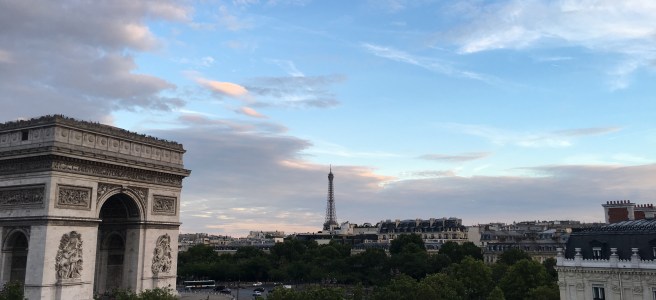
Just wanted to say hello from Paris. This week, I will be posting a blog that I meant to post two weeks ago! It has been a whirlwind month of living on the skinny branches. If I was more experienced with having a blog, I would have had posts at the ready and scheduled ahead of time to post while on these trips. Now I know how it needs to go.

Ah well! C’est la vie. Live and learn, and let the rest go.

Today I send you light from the City of Light. I am living out on the skinny branches, and the living feels fine.

#lifeontheskinnybranches #girlstrip2016 #paris #eiffeltower